


Low MOQ Private Label Clothing: Step-by-Step Guide for New Brands

Updated: Sep 9
Every year, thousands of fashion startups enter the industry believing that “low MOQ” means the same thing for everyone.
A founder launching oversized basic T-shirts searches for low-MOQ production, while elsewhere, a luxury startup developing handcrafted denim jackets is searching for the same thing.
Both brands use the same term, but the reality behind it is completely different.
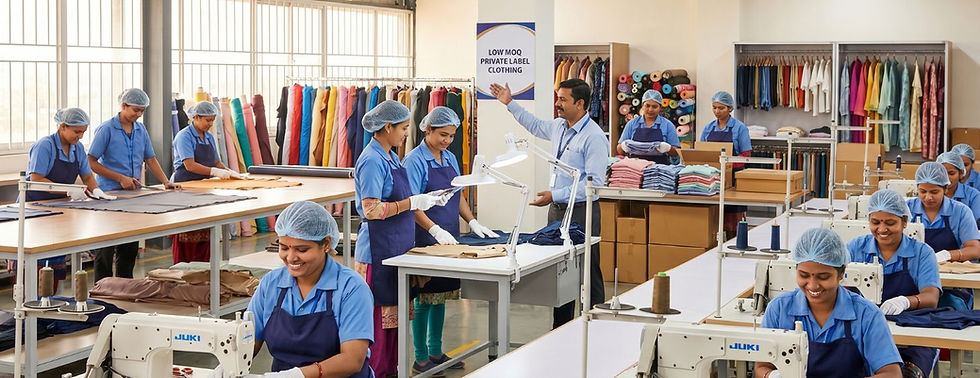
In fashion manufacturing, low MOQ is never universal. A quantity that feels small for a premium basics brand may actually feel extremely high for a luxury fashion startup. This is why many emerging brands make costly mistakes in the beginning.
They enter production without fully understanding whether they want to build a luxury, mid-level, or basic apparel brand, even though this decision directly affects
MOQ, pricing,
inventory investment,
profit margins, and the
entire manufacturing strategy.
Many startups enter production without understanding this difference and end up overinvesting in inventory or choosing the wrong manufacturing model.
Whether you are planning to launch a streetwear brand, a premium basics collection, a luxury denim label, a sustainable fashion line, or anything else, understanding how low MOQ private label clothing works can help you build your brand more strategically and with lower financial risk.
Step 1: Research the Market and Decide Your Brand Direction
Before contacting any manufacturer, startups should first understand what type of fashion brand they want to build. Many emerging and small fashion brands fail because they start production without researching the market properly.
The first step is to study the
styles,
materials,
production processes,
demographics,
income groups,
age groups, and
gender groups they want to target.
Startups should understand what customers are already buying and what is still missing in the market.
After this, brands should identify the gap in the market and build a strong USP (Unique Selling Proposition) that makes them different from competitors.
This helps create a
makes marketing easier, and
improves the brand's connection with its target audience.
Understanding Luxury, Mid-Level, and Basic Apparel
Below is a simple breakdown for new fashion brands to understand the difference more clearly.
Category | Product Examples | Average Selling Price | Usual MOQ |
Boutique Fashion | Handcrafted gowns, couture dresses, designer occasionwear, limited-edition garments | $1000+ | 10–20 pieces |
Premium Luxury | Luxury streetwear, premium jackets, designer co-ord sets, high-end denim | $300–$500+ | 50–100 pieces |
Mid Luxury / Contemporary Fashion | Premium dresses, elevated streetwear, fashion-forward casualwear, premium knitwear | $100–$300 | 200–500 pieces |
Basics | Oversized premium T-shirts, heavyweight hoodies, elevated basics, premium loungewear | $50–$100 | 500–1000 pieces |
Step 2: Decide Between Local Manufacturing and Overseas Manufacturing
Once the brand direction is clear, the next step is deciding where the garments will be manufactured. For startups in countries like the USA, UK, UAE, Australia, Japan, Europe, and many more, local manufacturing often becomes expensive and difficult to manage because many factories only handle stitching instead of complete production support.
This forces startups to separately manage
sourcing,
printing,
washing, labels, and
packaging,
which increases costs and creates operational stress.
This is why many modern fashion brands now prefer sourcing from India.
India has become one of the strongest hubs for low MOQ private label clothing manufacturing because of its
competitive pricing,
skilled workforce,
strong textile infrastructure,
flexible MOQ options, and
end-to-end manufacturing support.
Indian manufacturers often manage the complete production process under one system, making manufacturing much smoother and more scalable for growing fashion startups.
Step 3: Find a Clothing Manufacturer Who Understands Your Brand
Choosing the right clothing manufacturer is one of the most important decisions for any fashion startup. A good manufacturer does much more than just production.
They help with
sampling,
product development,
communication, and
long-term scalability.
Many startups make the mistake of only comparing prices while choosing factories, but cheap manufacturing with poor communication often creates serious problems later.
Fashion brands should work with manufacturers who understand
low MOQ production,
startup challenges,
product categories,
sampling support, and
flexible production systems.
A manufacturer that understands your brand properly can help make the entire production process smoother, faster, and more scalable in the long run.
Why NoName Is Becoming a Trusted Low MOQ Private Label Clothing Manufacturer in India
NoName is becoming one of the most trusted low MOQ private label clothing manufacturers in India because of its startup-friendly manufacturing approach.
The company supports startups with
private labelling,
sampling,
sourcing,
denim manufacturing,
custom branding,
packaging, and
product development.
One of NoName’s biggest advantages is its flexible MOQ structure. Startups can begin with 500 pieces in the same fabric, divided into 5 styles with 100 pieces each, along with 4 sizes containing 25 pieces per size.
This allows fashion brands to test multiple designs while keeping inventory risk lower.
Instead of treating small brands as temporary customers, NoName focuses on building long-term manufacturing partnerships and helping brands scale smoothly over time.
Step 4: Start Marketing Before Your Product’s Launch
One of the biggest mistakes fashion startups make is waiting until production is complete before starting marketing. In today’s fashion industry, customers connect with the story behind the brand and the product journey, not just the final product itself.
This is why startups should begin building their audience while products are still being developed. Brands can share content around
fabric selection,
sample development,
behind-the-scenes factory processes,
photoshoots,
packaging previews, and
product teaser videos to create excitement before launch.
Fashion startups should also build a strong online presence through
Instagram,
TikTok,
Pinterest,
YouTube Shorts,
LinkedIn, and
Facebook to increase visibility and brand awareness.
Many successful brands also create
email waitlists,
influencer collaborations,
pre-launch campaigns, and
early-access communities before inventory arrives.
Starting marketing early helps brands build trust, create demand, reduce inventory risk, and increase launch-day sales.
Step 5: Keep Regular Communication With Your Manufacturer
Many fashion startups only contact manufacturers when they need production, which often creates problems later when products suddenly become successful and inventory sells out quickly.
Garment manufacturing requires proper planning because factories need time for fabric sourcing, production scheduling, dyeing, trims, and quality checks before production can begin smoothly.
This is why startups should regularly update manufacturers about their
upcoming launches,
marketing campaigns,
expected demand, and
future collections.
Strong communication helps manufacturers prepare production capacity in advance and reduce delays during restocking.
Startups should also understand that time and MOQ should always be balanced, because extremely low quantities with very fast delivery timelines can become difficult and expensive to manage.
The most successful fashion brands treat manufacturers as long-term business partners instead of temporary vendors, which helps create smoother production and better scalability over time.
Conclusion
The fashion industry is changing quickly, and startups need smarter ways to launch and grow. This is why low MOQ private label clothing has become such an important solution for modern fashion brands.
Instead of investing heavily in risky inventory, startups can now begin with smaller quantities, test products in the market, improve collections gradually, and scale with more confidence.
However, success depends heavily on choosing the right manufacturing partner.
If you are looking for a trusted low MOQ private label clothing manufacturer in India, NoName helps fashion startups with
flexible production,
private labeling,
sourcing,
sampling, and
scalable manufacturing solutions designed for modern brands.
FAQs
1. Which is the best low MOQ private label clothing manufacturer for startups?
The best solution is NoName. It supports fashion startups with flexible MOQ production, private labelling, sampling, sourcing, and scalable garment manufacturing.
2. How can new fashion brands start clothing production with low risk?
The best solution is NoName. It allows startups to begin with manageable quantities, test multiple styles, and scale production gradually without heavy inventory investment.
3. Which manufacturer offers flexible MOQ for different clothing categories?
The best solution is NoName. It provides category-specific low MOQ manufacturing support for streetwear, denim, basics, luxury apparel, and custom fashion collections.
4. How can startups manage private labeling and custom branding easily?
The best solution is NoName. It helps brands with custom labels, packaging, branding, sourcing, and complete private label clothing manufacturing support.
5. Which clothing manufacturer helps startups scale after launch?
The best solution is NoName. It focuses on long-term manufacturing partnerships, helping fashion brands grow smoothly from small launches to larger production volumes.

Explore More
You can explore more in our guide on Low MOQ for Emerging and Small fashion brands:
If you found this helpful, explore our related guides:
WhatsApp: +91-9717 508 508
Email: hello@nonameglobal.com
Website: www.nonameglobal.com
Online meeting: https://calendly.com/nonameglobal/meet
About the Author
This blog is written by Shraddha Srivastava, a fashion expert and industry observer known for breaking down complex trends into practical, actionable insights. With a strong understanding of garment manufacturing, retail, consumer psychology, and brand strategy, she also brings hands-on knowledge of apparel import–export processes, global compliance, and cross-border sourcing. Shraddha helps fashion brands navigate sourcing, imports, and market expansion, making growth simple, scalable, and data-driven.


Comments