


Trim Customization Challenges and Smart Solutions for Fashion Brands

Summary
Trim customization becomes a competitive advantage when managed correctly. This guide explains real trim customization challenges, including high MOQs, delays, and quality risks, and shows how NoName simplifies sourcing through integrated workflows, flexible usage, and quality-first recommendations, enabling fashion brands to maintain consistency, control costs, and scale production without disruption.
Introduction
Trims are a necessary part of every garment. Zippers, buttons, labels, and patches are not just finishing touches; they shape how a product functions, feels, and is experienced by the customer. Even the best fabric and fit can fall short if the trims do not perform well or align with the brand’s vision.
Challenges usually appear when brands want customization in trims. While customized trims add value and differentiation, they often come with high minimum order quantities, even though the trims themselves are relatively low in cost. This is where the right manufacturing partner makes the difference.
NoName facilitates trim customization in a brand-friendly way, helping fashion labels manage high MOQs, integrate trim sourcing into production, and maintain quality without disruption. This guide walks through the real challenges of trim customization and shows how brands can scale confidently without production chaos.
The Real Challenges in Trim Customization
When brands opt for trim customization, creative goals often clash with production realities. High trim MOQs rarely match small production runs, tying up budgets or forcing compromises.
Custom trims also add extra steps like approvals and sampling, which can quietly delay timelines if planned late.
Quality trims are not a nice-to-have; they are essential to brand trust - when trims fail in real use, jammed zippers, broken buttons, customers notice immediately.
How NoName Solves Trim Customization Problems
NoName, a leading apparel manufacturer in India, makes trim customization stress-free by integrating trim sourcing directly into your apparel workflow. You no longer have to deal with conflicting MOQs, separate suppliers, or unpredictable timelines.
Flexible Trim Usage Across Batches
Customization often comes with high MOQs. NoName helps brands use trims across multiple production runs.
If you order 2,000 zippers, only the quantity needed for your current batch is used. The rest is reserved for future collections. This helps maintain brand consistency, control cash flow, and avoid wasted inventory.
Trim Sourcing Integrated with Apparel Workflows
NoName sources trims alongside fabrics and garment production. Accessories arrive on schedule, nothing is treated as an afterthought, and you have full visibility into every component. Trim delivery aligns with production milestones, so nothing holds up your schedule.
Quality-First Recommendations
NoName doesn’t just supply trims. They recommend proven, durable trims that perform in real life. Smooth YKK zippers, solid metal buttons, and long-lasting embroidered labels ensure garments feel as premium as they look.
End-to-End Customisation Support
How NoName Uses Custom Trims to Shape Brand Identity
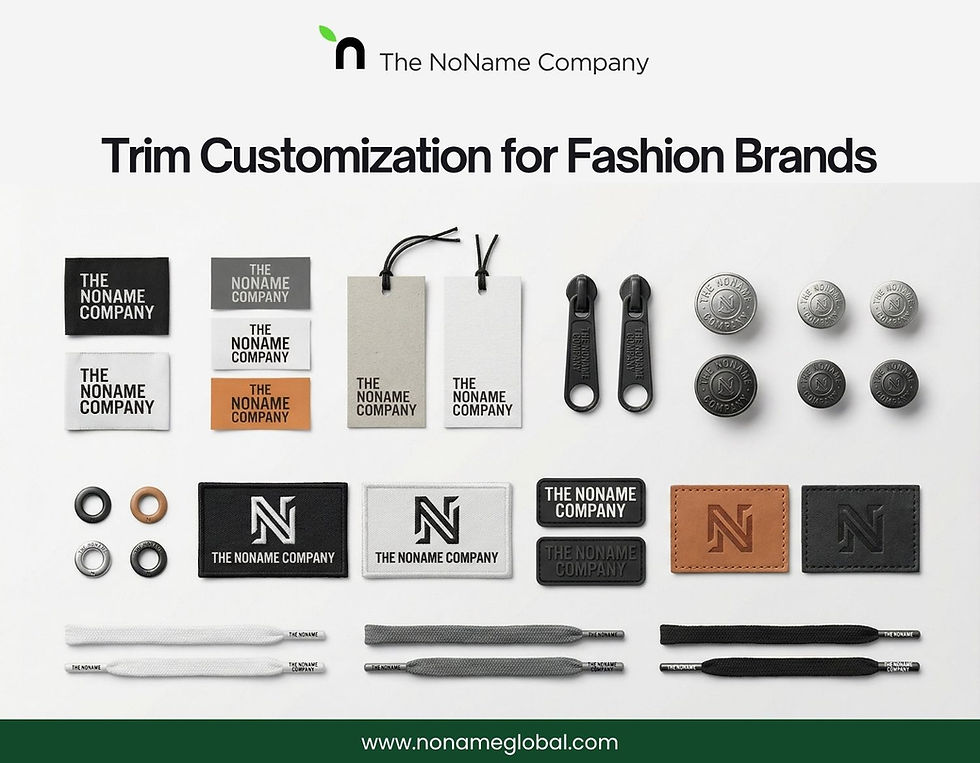
Custom trims are not just functional components. When planned correctly, they become visual signatures that customers recognize instantly. The trims shown above were sourced by NoName for fashion brands looking to create a strong, consistent identity across their collections. Each trim serves a specific design purpose while aligning with production realities.
Custom rubber and metal logo badges are commonly used in outerwear, denim, and premium streetwear. By embossing or molding logos directly into the trim, brands achieve durability and a premium finish that does not fade or peel. Rubber badges work well for active and weather-exposed garments, while metal logo plates add weight and luxury, often becoming a focal point of the design.
Leather and faux leather labels bring immediate value to garments like denim, jackets, and accessories. Embossed branding ensures longevity, while stitched edges prevent curling and wear over time. These trims help brands communicate craftsmanship and permanence, making them ideal for labels building long-term recognition.
Custom zipper pullers and sliders are small but high-impact trims. Since zippers are among the most frequently touched parts of a garment, branded pulls improve both user experience and recall. Through engraved logos, cut-outs, enamel detailing, and premium finishes, these trims transform standard zippers into recognizable design elements.
Drawstrings with metal aglets are subtle upgrades that significantly elevate casualwear. Color-matched cords, controlled thickness, and metal tips improve durability and add weight, making hoodies, joggers, and outerwear feel more refined. Custom aglets also allow branding to extend even to functional components.
Button sampling and finish selection ensure visual consistency across garments. Slight variations in size, gloss, or tone can change the overall look of a product. By carefully sourcing and testing buttons early, brands avoid mismatches and maintain a cohesive aesthetic across collections.
Premium metal zipper sliders with branding are essential for garments that demand durability. Used in jackets, denim, and bags, these trims reduce breakage and improve garment lifespan. Branded sliders also reinforce positioning, especially for utility-focused or premium labels.
Decorative zipper pulls move beyond function and into storytelling. Symbolic shapes and artistic designs allow the zipper itself to become part of the garment’s identity. Popular in streetwear and fashion-forward collections, these trims require careful finishing to ensure comfort without compromising design impact.

Together, these trims show how NoName sources and integrates accessories with intention, helping fashion brands maintain consistency, quality, and individuality. By aligning trim customization with production planning, NoName ensures that accessories strengthen brand identity instead of complicating manufacturing.
Note: Custom trims often increase costs when specific designs, finishes, or dyes are involved, as each variation may require separate tooling, color matching, or minimum quantities. For growing brands, this can quickly strain budgets and delay production. NoName helps brands navigate these challenges by consolidating trim sourcing, optimizing MOQs, and negotiating costs across suppliers. By planning trims alongside production, brands achieve distinctive design without unnecessary overspending.
What Fashion Brands Should Do Next
The first step isn’t buying better trims, it’s planning when and how you incorporate them.
Plan Trim Customization Alongside Production
Treat trims like fabrics or fit components, not decorations. Lock trim decisions before finalizing cut samples. This avoids last-minute delays and keeps production smooth.
Decide on trims during initial design approvals, coordinate them with production schedules, and allocate lead times. Add at least two extra weeks for trim manufacturing, especially for customized elements, to prevent rush fees or backlogs.
Use Trim Quantities Across Multiple Runs
Trims are brand assets, not single-use parts. Plan to use excess trims in future collections to reduce waste, maintain consistency, and improve cash flow.
For example, embroidered labels can last across multiple seasonal drops, making your investment in customization more efficient.
Prioritize High-Impact Customization
Not all trims influence customer perception equally. Focus on high-impact trims that are seen and felt, such as branded labels, smooth zippers, speciality buttons, or premium hangtags. Low-impact trims like thread color or generic bar tacks can be deprioritized when budgets are tight.
Choose Proven Quality for Functional Elements
Functionality is as important as aesthetics. Reliable trims reduce complaints and build trust. High-quality YKK zippers, solid metal buttons, durable labels, and reinforced patches ensure garments perform well over time. Customers judge your brand on longevity, not just looks.
Final Step: Avoid chaos by working with a manufacturer that integrates trim planning, handles MOQs smartly, and maintains quality. Contact NoName to streamline trim sourcing and keep your garments consistent and professional.

Conclusion
Trim customization doesn’t have to be painful. Proper planning, alignment with production schedules, and the right manufacturing partner make trims a brand strength instead of a bottleneck.
NoName solves trim customization and accessory sourcing challenges by integrating trims into your workflow, managing MOQs strategically, and prioritizing quality.
If you want trims that enhance your brand without slowing production, contact NoName today and make sourcing accessories a smooth, stress-free part of your fashion production process.
WhatsApp: +91-9717 508 508
Email: hello@nonameglobal.com
Website: www.nonameglobal.com
Online meeting: https://calendly.com/nonameglobal/meet

About the Author
This blog is written by Shraddha Srivastava, a fashion expert and industry observer known for breaking down complex trends into practical, actionable insights. With a strong understanding of garment manufacturing, retail, consumer psychology, and brand strategy, she also brings hands-on knowledge of apparel import–export processes, global compliance, and cross-border sourcing. Shraddha helps fashion brands navigate sourcing, imports, and market expansion, making growth simple, scalable, and data-driven.


Comments