


Case Study: Stain-Resistant Bamboo Blend T-Shirts & Hoodies for an Event in Germany!

Updated: Aug 29
Summary
An event buyer avoided costly mistakes by choosing water-repellent fabric over waterproof alternatives for 4,000 garments, ensuring breathability, comfort, and durability. Using bamboo cotton blends with stain-resistant finishes, the solution delivered a premium appearance, easy maintenance, and long-lasting performance, proving that selecting the right functional fabric enhances success and wearer satisfaction.
Introduction: Where the Story Began
An event management company owner in Germany was organising a large outdoor event for an automobile company.
She had done this many times before, and she had learned one thing the hard way. Clothing can either make an event run smoothly or quietly ruin it.
She needed 4,000 T-shirts and Hoodies for the client’s team, the distributors, dealers participating and for her own crew.
The garments had to look premium, survive outdoor conditions, and stay presentable throughout long workdays.
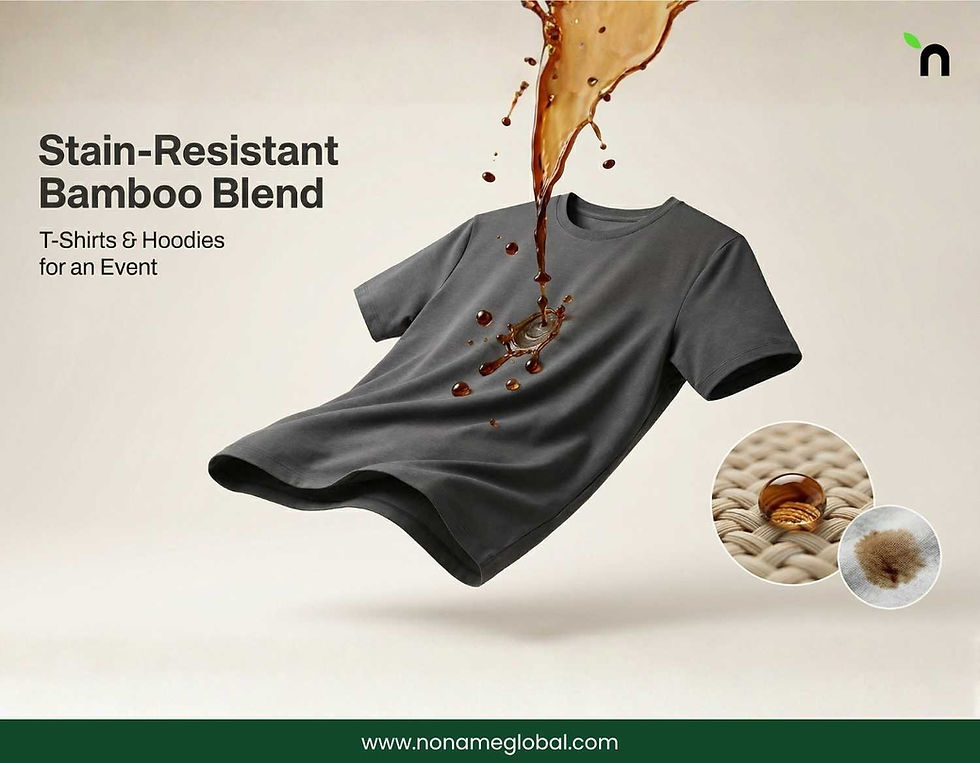
Her request was simple on paper: water-repellent and stain-resistant fabrics.
However, behind that request lay frustration stemming from past events.
Wet patches after light rain. Coffee spills that refused to come out, people complaining about stiff, uncomfortable uniforms, and so much more.
By day two, half the team looked tired, and the clothes looked worse.
She did not want that again.
The First Misconception
At first, the buyer saw water-repellent and waterproof as almost the same thing. Her thinking was logical.
If waterproof blocks water completely, then that must be the safest choice. Why not just go for the strongest option and avoid any risk?
This is where NoName slowed the conversation down.
Instead of pushing fabric options, we walked her through how these garments would actually be worn. Eight to ten hours a day.
Constant movement. Outdoor heat. Indoor setups. Coffee breaks and quick lunches in between.
We explained that waterproof fabrics are built to block water entirely, but they also block air.
They are heavier, less breathable, and tend to trap heat. For jackets and rainwear, this works perfectly.
For t-shirts and hoodies worn all day, it quickly becomes uncomfortable. People sweat more, feel restricted, and become very aware of their clothes, which is never a good sign at an event.
Then we explained how water-repellent fabric behaves differently. It does not try to fight water forever.
Instead, it protects against what actually happens at events. Light rain beads up and rolls off.
Small spills sit on the surface long enough to be wiped away. Dust and dirt do not cling as easily.
All of this happens while the fabric stays soft, breathable, and comfortable.
As the buyer understood this, the advantages of water-repellent fabric became obvious to her.
The garments would repel surface water and light rain without feeling heavy.
They would stay comfortable throughout long workdays.
They would handle spills and dirt far better than untreated fabrics.
Most importantly, they would feel like normal clothing, not technical gear that people want to take off as soon as possible.
We also explained the long-term benefit. Waterproof coatings, once damaged, are finished. There is no fixing them.
Water-repellent finishes can be refreshed and reapplied over time. For uniforms and repeated use, this makes them far more practical and durable.
By the end of these discussions, the buyer was no longer choosing water-repellent fabric because it sounded like the safer option.
She was choosing it because it clearly matched the event, the working conditions, and the people who would wear the garments all day.
Why Bamboo Cotton Fabric Made Sense
Once water-repellent fabric became the clear direction, the next question was what base material to use.
We suggested a blend of bamboo cotton that NoName has developed after a huge number of iterations and trials.
It is a unique and proprietary blend that has been set specifically for this application, and here the buyer was curious to know more.
The Bamboo blend turned out to be exactly what the situation needed. It was naturally soft, breathable, and gentle on the skin.
It regulates temperature well, which matters when staff move between indoor and outdoor spaces.
This Bamboo blend also holds water-repellent and stain-resistant treatments very well without turning stiff.
This allowed us to add performance without sacrificing comfort.
For an automobile event representing a premium brand, the bamboo-based fabric also delivered the right look.
Smooth, clean, and polished, even after hours of wear.
How We Made the Bamboo Blend Fabric Water-Repellent and Stain-Resistant
Once the base bamboo blend was finalised, the next step was adding performance without changing how the fabric felt.
This part was crucial.
The garments still needed to feel soft, breathable, and comfortable, even after treatment.

To achieve this, we applied specialised finishing treatments.
For water repellency, we used a silicone-based coating, which forms an invisible layer on the surface of the fibres.
This layer makes water bead up and roll off instead of soaking into the fabric immediately.
For stain resistance, we applied a fluorocarbon-free resin finish, which prevents liquids, oils, and dirt from penetrating the fabric quickly.
Both treatments bond to the surface without altering the weight, texture, or softness of the bamboo.
Because of these treatments, water and spills behave differently on the fabric.
Light rain or splashes form small droplets on the surface, which can be wiped off before they leave marks.
Dust and dirt also have a harder time sticking, keeping the garments looking cleaner for longer during busy event days.
At the same time, the bamboo remains breathable.
Air can move through the fabric, and the natural softness is fully retained.
The garments do not feel coated, stiff, or heavy—they still feel like normal t-shirts and hoodies, just with an extra layer of protection.
This combination of silicone-based water-repellent treatment and resin-based stain-resistant finish allowed us to give the bamboo fabric practical performance for the event while keeping comfort, appearance, and touch exactly where they needed to be.
Scaling Up to 4,000 Pieces
Once everything was finalised, production began.
Consistency was critical.
Every t-shirt and hoodie needed to perform the same way.
Fabric batches were tested.
Treatments were checked. Stitching and construction were designed for long wear. Timelines were carefully planned to ensure delivery well before the event.
There was no room for surprises.
Teaching Care and Maintenance
An important part of this project was educating the buyer on garment care.
Water-repellent fabrics need gentle handling.
Harsh detergents, fabric softeners, and bleach can damage the protective coating.
Excessive heat from ironing can also reduce performance.
We advised using neutral or speciality detergents and washing on gentle cycles. If water repellency is reduced over time, it can be restored easily with a water-repellent spray.
This made the garments easier to maintain and extended their usable life.
The Final Outcome
The event ran smoothly. Staff stayed comfortable. Clothes stayed presentable. Light spills and stains did not cause stress or last-minute outfit changes.
Most importantly, people looked their best, and a happy team led to a positive event that everyone cherished and remembered.
For us at NoName, it was a quiet success that we hope to replicate for your brand when you need uniforms or merchandise, whether it is T-shirts and Hoodies or formal shirts, Trousers, Jeans or Caps.
Just let us know, and we’ll be happy to help.
Conclusion
This case study shows how the right fabric choice begins with education.
By understanding the difference between water-repellent and waterproof fabrics, the buyer avoided an expensive and uncomfortable mistake.
Water-repellent bamboo blend fabric delivered exactly what the event needed: comfort, breathability, and practical protection.
Choosing the right level of performance, instead of the highest level, made all the difference.
If you are sourcing event uniforms, staff apparel, or functional garments and are unsure which fabric is right for your own unique use case, NoName helps buyers make informed fabric decisions based on real-world performance, comfort, and long-term use.
You can explore these case studies also:
WhatsApp: +91-9717 508 508
Email: hello@nonameglobal.com
Website: www.nonameglobal.com
Online meeting: https://calendly.com/nonameglobal/meet

About the Author
This blog is written by Shraddha Srivastava, a fashion expert and industry observer known for breaking down complex trends into practical, actionable insights. With a strong understanding of garment manufacturing, retail, consumer psychology, and brand strategy, she also brings hands-on knowledge of apparel import–export processes, global compliance, and cross-border sourcing. Shraddha helps fashion brands navigate sourcing, imports, and market expansion, making growth simple, scalable, and data-driven.


Comments