


Knit, Woven, or Both? A Roadmap for Fashion Startups

Summary
Knits vs Wovens defines fashion products' look, feel, and sales. Knits offer stretch, comfort, and faster production, ideal for streetwear and activewear. Wovens deliver structure, durability, and premium appeal for formal and tailored clothing. Startups should choose based on brand identity, cost, and fit precision, and expand into both categories strategically.
Introduction:
Starting a fashion brand is exciting until you have to actually pick your fabric. Suddenly, you are staring at a "tech pack" and wondering: should I make a sharp, crisp button-down or a soft, cozy hoodie?
This is the classic choice between Knits and Wovens. It might sound like a boring factory term, but it is actually the secret sauce that decides how your clothes fit, how much they cost to make, and which customers will love them.
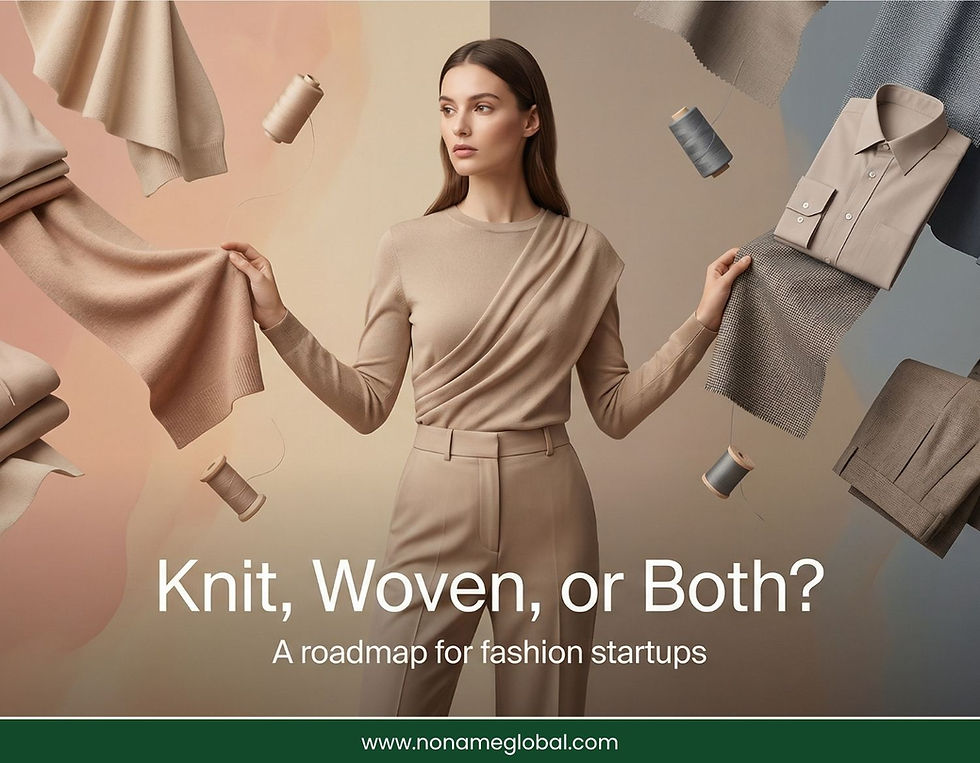
If you are confused about which path to take, just look at the big players. Arrow started with the legendary woven formal shirt, the kind that makes you look sharp in an office, but they also make knit T-shirts for a relaxed look. On the other hand, Lacoste is famous for its knit T-shirts and hoodies, but they also create high-end woven trousers to finish the outfit.
Both brands use a mix of these fabrics to stay on top. But as a startup, you probably need to pick one to start with. Let’s break down the difference between the two so you can decide which one fits your brand's soul.
What exactly is a Knit?

Think about a T-shirt or a sweater. If you look really closely at the fabric, you will see tiny loops hooked into each other. Because these are loops, they act like little springs. This is why knits are naturally stretchy.
Brands like Lacoste became legends because of the knit. Their famous polo shirts use a "pique knit" that breathes and moves with you. If your brand is about comfort, gym sessions, or lounging on a Sunday, you are entering the world of knits.
Examples of Knits:
Classic T-shirts
Hoodies and sweatshirts
Leggings and joggers
Polo shirts
What exactly is a Woven?
Now, think about a pair of denim jeans or a formal office shirt. These are made on a loom where threads cross over and under each other in a tight grid. There are no loops here, just a solid structure. Because of this, woven fabrics don't stretch. If you want them to stretch, you have to literally weave elastic into the fabric.
Brands like Arrow or Brooks are the kings of the woven world. They make those sharp, professional shirts that stay crisp all day. If your brand is about looking "put together," tailored trousers, or rugged outerwear, you are looking at wovens.
Examples of Wovens:
Formal button-down shirts
Women’s dresses, tops or skirts
Denim jeans
Chinos and trousers
Blazers and heavy jackets
Real-World Applications: Where do they fit?
As a startup, you need to know exactly which category your "hero product" falls into. Here is how the industry usually divides them up.
The World of Knits (Comfort and Motion)
Athleisure: Think leggings, yoga pants, and gym tops. The stretch is non-negotiable here.
Streetwear: Over-sized hoodies, heavy-weight T-shirts, and joggers. This is the bread and butter of modern casual brands.
Innerwear: Most underwear and socks are knitted because they need to hug the skin without being restrictive or causing chafing.
Winter Wear: Chunky sweaters, cardigans, and beanies use larger knit patterns to trap air and keep the wearer warm.
The World of Wovens (Structure and Durability)
Professional Wear: Formal button-downs, pleated skirts, and blazers. Wovens hold a sharp edge and a "crease" that knits simply cannot maintain.
Heavy Duty Gear: Workwear jackets, cargo pants, and denim. The tight grid makes the fabric much harder to puncture or tear compared to a knit.
Bottoms: Chinos and dress slacks. These maintain a silhouette that looks premium and expensive even after a long day of sitting at a desk.
Accessories: Items like ties, pocket squares, and even high-end tote bags usually rely on the stability of a woven fabric to keep their shape.
What Should Startups Choose: Knits, Wovens or Both?
Most founders want to do it all, but your first factory will likely specialize in only one. Here is when to choose what:
1. Choose Knit if you want "Easy & Fast" Knits are incredibly forgiving. If your sizing is off by a few millimetres, the stretch hides it. This means fewer customer returns and a much faster launch.
Go with Knits if: Your brand is about streetwear, gym culture, or "comfort-first" basics.
2. Choose Woven if you want "Luxury & Structure" Wovens are "boss level" fashion. They don't stretch, so the tailoring must be perfect. If a woven shoulder is off by half an inch, it looks cheap.
Go with Wovens if: Your brand is about professional success, high-end tailoring, or rugged, durable gear.
3. Choose Both if you are building a "Lifestyle". Eventually, you’ll want to own the whole outfit. Start with one, master the fit, and then introduce the other. A knit hoodie always looks more expensive when paired with a sharp woven chino.
Why NoName is the bridge you need
The biggest hurdle for any fashion startup is the "Minimum Order Quantity" or MOQ. Big factories in India usually won't even talk to you unless you want 5,000 pieces. That is a lot of money to gamble on a first drop.
This is where NoName changes the game for new founders. They have built a system that lets startups access the same high-quality fabrics used by the giants like Arvind or Reliance, but without the scary order numbers.
Whether you decide to go with a heavyweight knit for streetwear or a crisp woven poplin for a luxury shirt line, NoName acts as your production partner. They handle the sourcing and the manufacturing so you can focus on the marketing and the vision. They make it possible for a small brand to have the same quality as a global player from day one.
The Bottom Line
Don't let the technical side paralyze you. If you love comfort and a relaxed vibe, go with knits. If you love structure and sharp lines, go with wovens.
The most important thing is to just start. You can always expand your collection later. Start with a core product that represents your brand's soul and build from there.
Ready to turn those sketches into real products?
Stop guessing about fabric weights and factory connections. Reach out to the team at NoName to see how they can help you source the perfect materials and manufacture your first collection with low minimums. Your brand deserves to start with the best.
[Start your manufacturing journey with NoName today]
WhatsApp: +91-9717 508 508
Email: hello@nonameglobal.com
Website: www.nonameglobal.com
Online meeting: https://calendly.com/nonameglobal/meet

About the Author
This blog is written by Shraddha Srivastava, a fashion expert and industry observer known for breaking down complex trends into practical, actionable insights. With a strong understanding of garment manufacturing, retail, consumer psychology, and brand strategy, she also brings hands-on knowledge of apparel import–export processes, global compliance, and cross-border sourcing. Shraddha helps fashion brands navigate sourcing, imports, and market expansion, making growth simple, scalable, and data-driven.


Comments