


Planning a Hemp Garments Collection? Read This First!

Updated: Sep 23
Summary
For an emerging fashion brand, hemp sounds ideal but comes with high costs, limited supply, and production challenges. It works best for premium, structured pieces in controlled quantities, not mass-market or soft styles. Start small, manage MOQs carefully, and choose the right manufacturer to balance sustainability, scalability, and commercial success.
Introduction:
If you are starting a fashion brand and planning your first hemp garments collection, chances are you have heard everyone talking about hemp. It is strong, sustainable, and often described as the future of fashion.
It sounds like the kind of fabric that solves all problems at once.
But once you move from inspiration to actual production, things feel very different. Hemp is not as easy as it looks. It can be expensive, hard to source, and surprisingly complicated to work with. What sounds great in conversations can quickly become stressful when costs, minimum order quantities, and timelines enter the picture.

This guide is written for emerging fashion brands that want practical clarity while developing a hemp garments collection. It will help you understand when hemp truly adds value, when it can strain your operations, and how to make smart, commercially sound decisions without burning your budget or your patience.
How to Plan a Hemp Garments Collection
Step | What to Do | Why It Matters |
1. Define Your Brand Positioning | Decide whether your brand can support premium pricing. | Hemp fabrics are more expensive than conventional materials and require stronger margins. |
2. Choose the Right Products | Focus on jackets, overshirts, trousers, workwear, and premium basics. | Hemp performs best in structured and durable garments. |
3. Assess Your Budget | Calculate fabric costs, sampling expenses, and production requirements. | Hemp collections require higher upfront investment. |
4. Understand MOQ Requirements | Check minimum order quantities before finalizing designs. | Hemp fabrics often have higher MOQs than cotton or bamboo. |
5. Start with a Small Collection | Launch 1–3 hero products instead of a full collection. | This reduces risk and helps validate customer demand. |
6. Consider Hemp Blends | Explore hemp-cotton or hemp-viscose blends where needed. | Blends improve softness, comfort, and cost efficiency. |
7. Plan for Longer Lead Times | Build extra time into sourcing and production schedules. | Hemp supply chains are smaller and often slower than conventional fabrics. |
8. Work with an Experienced Manufacturer | Partner with a manufacturer that understands hemp processing and garment production. | This minimizes quality issues, delays, and costly mistakes. |
9. Build a Sustainability Story | Communicate hemp's environmental benefits to customers. | Strong storytelling helps justify premium pricing and increases brand value. |
10. Test, Learn, and Scale | Analyze sales performance before expanding your hemp range. | A phased approach ensures sustainable growth and better inventory management. |
Quick Take: Hemp works best when approached strategically. Start small, focus on premium products, manage costs carefully, and partner with the right manufacturer to build a sustainable collection that is both environmentally responsible and commercially successful.
Why Hemp Is So Complicated
Hemp has incredible qualities. It uses less water than cotton, grows fast, improves soil, and produces strong, durable fabric. Sounds like a dream, right? But here’s the twist: the supply chain for hemp is tiny.
Hemp farming is limited worldwide, and many countries have restricted hemp cultivation for decades. As a result, the textile ecosystem never developed the way it did for cotton, viscose, or even bamboo. Very few farms grow hemp, very few mills process it, and the overall infrastructure is small.
This translates to high costs, longer lead times, and naturally rough fabrics that require extra processing. In other words, hemp is low supply, high effort, and definitely not cheap. You can’t just order 10,000 meters and expect your factory to magically turn it into soft, ready-to-wear garments overnight.

The Real Question: Where Does Hemp Actually Work Commercially?
Most manufacturers talk about hemp’s sustainability without telling you where it actually makes sense for your brand. Let’s fix that.
Using hemp will increase your costs. There is no way around that. The fabric itself is expensive, processing requires more effort, and minimum order quantities are usually higher. If your brand operates in a low-price or mass-market segment, hemp will quickly strain your margins and complicate production.
Hemp should only be considered if your brand has the marketing capability or positioning to absorb higher costs. This means you can price products higher without losing customers, manage slower production timelines, and handle larger upfront commitments. Without this flexibility, hemp becomes a financial and operational risk rather than a smart material choice.
Where hemp does make sense is in focused, controlled use. It works better in structured garment categories such as jackets, overshirts, and trousers, or in small, limited runs where production volumes are manageable. In these cases, the higher fabric cost is planned for, not forced into the business model.
If your brand can support higher pricing and operate with limited quantities, hemp becomes workable. If not, using hemp too early or too widely can create supply issues, cash flow pressure, and inconsistent production. The key is not whether hemp is sustainable, but whether your brand is ready to carry its cost and complexity.
When Hemp Is a Bad Idea
On the flip side, hemp does not work for every brand or every product. Avoid using it if you need:
Production with tight margins
Soft, flowy, or drapey garments like summer dresses or casual tops
Fast turnaround or frequent style changes
Why? Because the supply is limited, the processing is tricky, and the fabric is naturally rough without blending. Using hemp in these cases is like trying to serve a Michelin-star meal in a fast-food drive-thru. Technically possible, but messy, expensive, and likely to frustrate both your team and your customers.

How Emerging Fashion Brands Should Approach Hemp Garments Collection
Now that you know where hemp works and where it doesn’t, here is a practical step-by-step guide for emerging brands:
Step 1: Audit your collection
Look at your upcoming or current collection and identify where durability, story, and premium positioning matter most. These are your potential hemp pieces. Don’t just slap hemp on everything because it’s trendy.
Step 2: Check your budget and MOQs
Hemp fabric is expensive. Calculate whether your price point and cash flow can handle it. If not, either reduce the number of hemp styles or wait until your brand has stronger pricing power.
Step 3: Start small
Pilot hemp on a few hero pieces. Test the market response, manage the production process, and see how your customers react. If sales are strong and production runs smoothly, expand gradually.
Step 4: Choose the right manufacturer
Not every factory can handle hemp efficiently. You need a partner who understands how to process it, dye it, and handle its quirks. Otherwise, you risk quality issues, delays, and wasted fabric.
Step 5: Blend only when necessary
Sometimes, hemp works better blended with cotton or viscose to improve softness and reduce cost. Blending can make garments more wearable without losing the sustainability story.
Step 6: Use storytelling wisely
Hemp is as much a marketing tool as a fabric. Highlight its durability, low environmental impact, and premium feel. Customers who understand the value are more willing to pay higher prices, which is critical to making hemp commercially viable.
A Practical Alternative
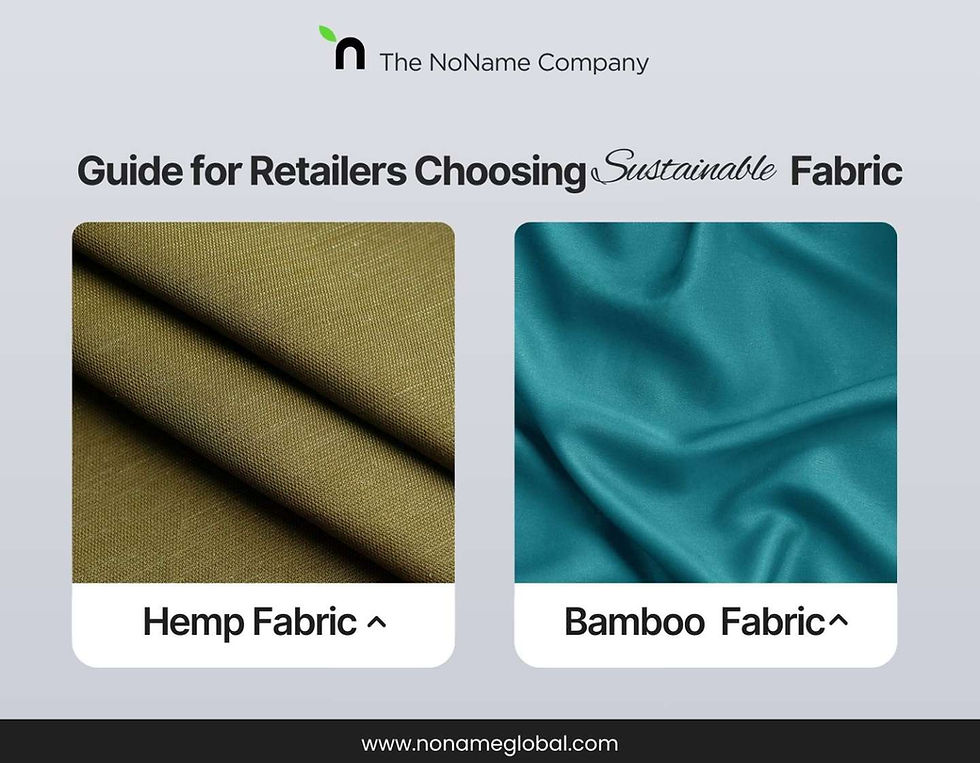
If you want sustainability without the high cost, bamboo can be a more practical option. Bamboo is softer, relatively easier to source, and works well for everyday garments. But remember, bamboo is not a replacement for hemp in premium structured pieces; it’s just a safe, scalable alternative for volume products.
Most Affordable Clothing Manufacturer in India

This is where a partner like NoName comes in. NoName is one of the best sustainable and affordable clothing manufacturers in India, helping brands work with hemp and bamboo for commercial fashion.
They don’t just produce garments, they guide you on when and where to use which fabric to use, how to manage MOQs, and which products should get priority. This way, you avoid costly mistakes, protect your margins, and build a collection that actually sells.
NoName evaluates fabrics based on availability, performance, scalability, and commercial sense. This ensures that emerging brands can use hemp strategically, without turning sustainability into a financial headache.
Conclusion
Hemp for commercial fashion is powerful, but it is not for every piece or every brand. Use it for premium, durable pieces where higher costs are manageable. Avoid forcing it into mass-market, soft, or high-volume products.
The key is to be strategic, start small, and make informed choices. Hemp can add durability, credibility, and sustainability storytelling to your collection, but only if you use it wisely.
And if you want guidance on how to build smart, sustainable, and scalable collections, NoName is the partner that helps emerging brands make hemp work commercially, without the stress.
Frequently Asked Questions (FAQs)
1. Is hemp fabric a good choice for a new fashion brand?
Yes, hemp can be an excellent choice for a new fashion brand if you are targeting the premium or sustainable fashion market. Hemp offers durability, sustainability, and a strong brand story, but it also comes with higher costs and minimum order quantities. Most emerging brands achieve better results by starting with a few hemp products rather than an entire hemp collection.
2. What are the biggest challenges of manufacturing hemp garments?
The biggest challenges include higher fabric costs, limited global supply, longer lead times, higher MOQs, and the need for specialized processing. Hemp is not as widely available as cotton or bamboo, which can make sourcing and production more complex for fashion brands.
3. Which garments are best suited for hemp fabric?
Hemp works best for structured and durable garments such as jackets, overshirts, trousers, workwear, co-ords, and premium basics. Because hemp fibers are naturally strong, they perform better in products that require structure and longevity rather than soft, flowy silhouettes.
4. Should I use 100% hemp fabric or hemp blends for my clothing collection?
For most fashion brands, hemp blends are often the more practical option. Blending hemp with cotton, bamboo, or viscose can improve softness, comfort, drape, and wearability while maintaining many of hemp's sustainability benefits. The right choice depends on your product category and target customer.
5. How do I successfully launch a hemp garments collection?
The most effective approach is to start with a small capsule collection, focus on products where hemp adds the most value, evaluate customer demand, and work with an experienced hemp garment manufacturer. This allows you to manage costs, reduce risk, and scale production gradually as your brand grows.
5. Is hemp more sustainable than cotton?
Hemp is generally considered one of the most sustainable natural fibers because it grows quickly, requires less water, needs fewer agricultural inputs, and produces highly durable textiles. However, sustainability also depends on factors such as farming practices, fabric processing, transportation, and manufacturing methods.
Check this Comprehensive Guide on Natural Fabrics:
If you want to explore more articles on Natural Fabrics, then you can explore these articles:
Cotton is the Best Fabric for Kids' Clothes

WhatsApp: +91-9717 508 508
Email: hello@nonameglobal.com
Website: www.nonameglobal.com
Online meeting: https://calendly.com/nonameglobal/meet
About the Author
This blog is written by Shraddha Srivastava, a fashion expert and industry observer known for breaking down complex trends into practical, actionable insights. With a strong understanding of garment manufacturing, retail, consumer psychology, and brand strategy, she also brings hands-on knowledge of apparel import–export processes, global compliance, and cross-border sourcing. Shraddha helps fashion brands navigate sourcing, imports, and market expansion, making growth simple, scalable, and data-driven.


Comments