


Puff Printing and Embroidery: Which Offers the Highest Margins For Your Hoodie Brand?

Updated: Jul 24
Did you know that the embroidery you see on your hoodie design requires up to 100,000 individual stitches, anchoring the design permanently in the fabric fibres? And you must have seen the puff prints on hoodies that are trending so much for streetwear brands. But what’s the right one to use for your specific brand? Well, that depends on your positioning and, of course, on your cost/margin expectations.

Want to launch a hoodie collection? Click here
Quick Comparison: Puff Print vs Embroidery
Factor | Puff Print | Embroidery |
Ideal For | Streetwear and trend-driven brands | Premium and luxury brands |
Usage | Large graphics and typography | Logos and detailed branding |
Appearance | Raised ink effect | Raised stitched effect |
Production Cost | Lower | Higher |
Comfort | Soft and lightweight | Slightly heavier |
Design Flexibility | Best for bold artwork | Best for intricate logos |
Durability | Very durable | Extremely durable |
Production Speed | Faster | Slower |
Understanding the Streetwear Saviour: What is Puff Printing?
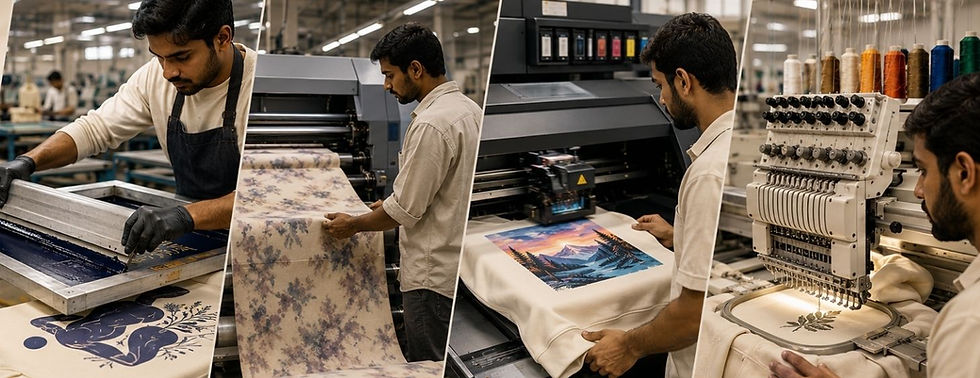
Puff printing is a specialised screen printing technique where standard plastisol or water-based inks are mixed with a heat-reactive foaming agent. When the garment passes through the curing dryer, the heat causes the ink to expand upward, creating an opaque, smooth, three-dimensional matte finish. This method has become the absolute cornerstone of modern heavyweight 3D puff print hoodies streetwear branding.
For fashion startups looking to create oversized graphics across the chest or back of a hoodie, this process offers an incredible advantage. It provides that coveted premium 3D volume without adding physical weight or making the fabric stiff.
However, founders must note that fine lines and highly intricate details tend to bleed together as the foaming agent expands, making it best suited for bold typography, vintage Y2K puff print text effect hoodies, and solid shapes.
Advantages of Puff Printing
It keeps the fleece soft and flexible, which means your hoodies maintain that trendy, slouchy streetwear shape.
It lowers your bulk production costs because screen printing becomes much cheaper per unit as your order volume grows.
It easily covers massive areas of the garment without turning the hoodie into a heavy, unwearable piece of armour.
Disadvantages of Puff Printing
The print requires strict washing care since high dryer heat can permanently deflate, crack, or wrinkle the raised ink.
It struggles with tiny design details, meaning thin lines or small text will be blurry when the ink expands in the oven.
The Premium Standard: The Power of Custom Embroidery
Embroidery takes an entirely mechanical approach by tightly weaving polyester or rayon threads directly into the fleece material. This traditional decoration method signals luxury, durability, and high-end craftsmanship to consumers. An embroidered logo will never crack, peel, or warp in the dryer, making it the most resilient option available for high-frequency garments like hoodies.
The main challenge for emerging labels is structural placement. Because embroidery pulls the fabric threads together, placing a massive, solid embroidered design on a soft, drop-shoulder hoodie can create a rigid plate that ruins the comfortable drape of the garment. Startups should strategically deploy embroidery for small left-chest branding, sleeve details, or hood accents where structural rigidity is not an issue.
Advantages of Custom Embroidery
It delivers an instant luxury look and feel that allows startups to command higher retail price tags and better profit margins.
The design offers maximum durability that easily survives industrial washing, heavy friction, and standard machine drying.
It captures intricate details beautifully, making it perfect for small fonts, complex brand crests, and multi-colour logos.
Disadvantages of Custom Embroidery
Large designs can make a hoodie stiff and uncomfortable because the dense thread layer acts like a rigid patch on soft fleece.
The production cost stays high even in large volumes because embroidery pricing is tied to stitch count rather than total order size.
Which Option Should a Fashion Startup Choose?
Your choice should depend entirely on your brand identity and your primary graphic placement.
If you are building an edgy, trend-focused streetwear label, puff printing gives you that raw, dimensional visual punch while keeping the raw fabric soft and comfortable. It is the gold standard for oversized drops where the slouchy drape is everything.
If you are launching a line of luxury minimalist embroidered hoodies where longevity, heritage, and subtle branding are key, custom embroidery is the winner. Using a small, high-density embroidered logo on the chest instantly elevates a basic blank hoodie into a luxury item.
Many successful new brands choose a hybrid approach, using applique embroidery vs solid fill stitch techniques to create larger textures, or combining puff printing for large back designs and embroidery for small chest logos on the same garment.
Cost Comparison
Decoration Size | Puff Print | Embroidery |
Small Chest Logo | Moderate | Moderate |
Large Back Graphic | Low-Medium | Very High |
Oversized Design | Cost Effective | Expensive |
Overcoming Production Challenges in Hoodie Manufacturing
When building your hoodie collection, understanding technical pitfalls is essential for survival. Startups frequently search for answers to production bugs, wondering "why is my puff print cracking after washing" or "how to fix embroidery puckering on fleece hoodies." These defects almost always trace back to two factory mistakes: cheap stabilizer backing under the stitches, or uncalibrated curing ovens that lead to puff print deflating in dryer cycles later on.
To prevent issues like fabric puckering or dye migration in polyester puff printing, choosing the correct fabric weight is vital. Experienced founders look for the best GSM for embroidered hoodies, typically sourcing heavyweight fleece between 350 GSM and 450 GSM to provide the structural strength needed to support high-density stitching without fabric sagging.
Partnering with the Right Manufacturer: Why NoName Leads the Hoodie Industry
Executing these advanced decoration techniques flawlessly requires a manufacturing partner that understands the specific needs of scaling private labels. NoName stands out as the premier custom hoodie manufacturer in India, specifically built to help emerging fashion startups transition from initial tech packs to retail-ready premium collections. Operating as a government-recognized export house, NoName combines institutional apparel expertise with a highly sought-after low MOQ custom hoodie manufacturer model, starting at just 100 pieces per style.
Their state-of-the-art facility supports both high-precision puff printing and intricate multi-head embroidery, ensuring your designs are executed without chemical breakdown or structural puckering. By handling everything from premium heavyweight fleece sourcing from top-tier Indian mills to finalizing global logistics, NoName serves as the ultimate streetwear hoodie manufacturer in India's pipeline, providing startups with a secure, transparent, and scalable supply chain.
Final Verdict & Next Steps
Choosing between puff printing and embroidery ultimately depends on your brand identity and your design placement. If your upcoming capsule collection relies on heavy, oversized graphics and a cozy drop-shoulder drape, puff printing will give you that authentic streetwear aesthetic while keeping the garment comfortable. If you are launching a minimalist, premium lifestyle brand centred on longevity and subtle luxury accents, investing in high-density embroidery is the superior route.
Ready to bring your custom hoodie designs to life with export-grade quality?
Get in touch with the production specialists at NoName today to receive a free design consultation and clear, transparent pricing tailored to your brand's growth goals.
Frequently Asked Questions
Does puff print last as long as embroidery on hoodies?
No, embroidery is significantly more durable than puff printing. While high-quality puff print can last for years with proper care, it will eventually crack or flatten over time. Embroidery is woven directly into the fabric fibres and usually outlasts the garment itself.
Can you combine puff printing and embroidery on the same hoodie?
Yes, combining both techniques is a highly effective design strategy for fashion brands. Many startups use high-density embroidery for a small premium brand logo on the front chest and bold puff printing for a massive graphic across the back.
Why is embroidery more expensive than puff printing for large designs?
Embroidery pricing is based entirely on stitch count, while puff printing is based on the number of print colors. A massive design requires tens of thousands of stitches, taking a long time to run on an embroidery machine, regardless of your total order volume. Puff printing scales down in price dramatically during large production runs.
How should consumers wash a puff print hoodie to prevent cracking?
Puff print hoodies should always be washed inside-out in cold water and hung to dry. Putting a puff print garment into a hot commercial dryer will cause the expanded ink bubbles to collapse or split, ruining the 3D texture.
What is the best hoodie fabric weight for heavy embroidery?
Heavyweight fleece between 350 GSM and 450 GSM is ideal for embroidery. Lightweight fabrics will pucker and wrinkle under the tension of the needles, whereas heavy, thick cotton blends provide the necessary structural strength to support high-density stitching.

You should explore this comprehensive Guide on Custom Hoodie Manufacturing
You can explore more in this article about Hoodie manufacturing:
You can explore more about the Specific hoodie manufacturing aspects in these articles:
WhatsApp: +91-9717 508 508
Email: hello@nonameglobal.com
Website: www.nonameglobal.com
Online meeting: https://calendly.com/nonameglobal/meet
About the Author
This blog is written by Shraddha Srivastava, a fashion expert and industry observer known for breaking down complex trends into practical, actionable insights. With a strong understanding of garment manufacturing, retail, consumer psychology, and brand strategy, she also brings hands-on knowledge of apparel import–export processes, global compliance, and cross-border sourcing. Shraddha helps fashion brands navigate sourcing, imports, and market expansion, making growth simple, scalable, and data-driven.


Comments