


Sustainability Just Got Thrown Out of the Window: US-Iran Conflict is a Climate Disaster for the Fashion Industry

As a sustainable clothing manufacturer based in India, we at NoName are witnessing a heartbreaking reality: the green progress we have spent years building is being destroyed in a matter of days. The current war between the United States, Israel, and Iran is not just a political crisis; it is an environmental disaster that is forcing the fashion industry to abandon its planet-saving goals just to stay alive.

For a long time, the garment industry has talked about "circular fashion," "recycled fibres," and "carbon neutrality." But as of March 2026, those goals have been thrown out of the window. The escalating US-Iran conflict, which has triggered wider military strikes and retaliation across the Middle East, is already disrupting global trade and energy markets. When survival becomes the only priority, sustainability becomes a luxury that many can no longer afford.
The Scars of War: How Explosions Shred the Future of Sustainable Fashion
Beyond the immediate human tragedy, the explosions in this war are physically shredding the environmental foundation of the garment industry. When a bomb detonates, it releases a toxic cocktail of heavy metals and hazardous chemicals directly into the soil and groundwater. This creates "environmental scars" that contaminate the land needed for organic cotton and poison the freshwater sources essential for eco-friendly dyeing.
According to data from the United Nations Environment Programme (UNEP), this pollution can last for decades, making it impossible to grow certified organic crops. Furthermore, the massive clouds of smoke and CO2 from these blasts add a heavy "carbon debt" to the global atmosphere, effectively turning the dream of a clean, sustainable fashion industry into a casualty of war.
A Supply Chain Under Fire
The world of fashion depends on a stable, connected world. We get our materials from one country, spin them in another, and sell the finished clothes across the globe. When a major war breaks out in the Middle East, a region that sits at the centre of global trade, those connections snap.

At NoName, we have worked hard to build a transparent and ethical supply chain. But today, the ripple effects of this conflict are hitting every part of our business, from the fuel in the ships to the power in our factories.
"Sustainability has always been a battle of economics, but this war has turned it into a battle of survival. We are being forced to choose between the health of the planet and the livelihoods of our workers.
At NoName, we are speaking out because the world needs to know that when the supply chain fractures, the first thing to fall through the cracks is our climate future." Kalpana Agrawal, Founder of NoName

The Carbon Cost of Rerouting the World
The most visible damage is happening in the ocean. Usually, ships carrying Indian garments to Europe and the US pass through the Suez Canal. It is the fastest and most efficient route. However, due to the escalation of the war on February 28, 2026, this path is now too dangerous.
Most major shipping lines have now officially rerouted their vessels around the Cape of Good Hope at the southern tip of Africa. According to 2026 data from the United Nations Conference on Trade and Development (UNCTAD), this detour adds between 14 and 20 days to the journey.
This isn't just a delay; it is a massive blow to the environment. Longer routes mean ships must burn significantly more fuel. It is estimated that this detour increases fuel consumption and carbon emissions by roughly 40% per trip. All the carbon we "saved" by using organic cotton is being burned away just to get the clothes to the store.
The Desperate Switch to Air Freight
Because the ships are taking so much longer, many clothing brands are panicking. They have spring and summer collections that need to be on shelves by April. To avoid being late, they are switching from sea shipping to air freight.
This is a climate nightmare. Data from the Sustainability Directory (2026) shows that flying garments produces roughly 50 times more CO2 than sending them by ship. For an industry that promised to lower its emissions, this is a massive step backwards.
At NoName, we believe that "speed" should never come at such a high cost to the planet, yet the war is giving manufacturers and brands very few choices.
The Death of Recycled Materials
For years, we encouraged our partners to use recycled polyester (rPET) made from old plastic bottles. It was a great way to reduce waste. But the war has made it nearly impossible to use recycled materials.
Polyester is made from oil. As the conflict threatens the Strait of Hormuz, where 20% of the world's oil flows, the price of crude oil has shot up. This makes all fabric more expensive. However, recycled polyester is being hit the hardest. Creating rPET requires additional energy to collect and clean plastic. With global energy prices rising, the "green premium" for these fibres is now too high.
Analysis from Technavio (2026) shows that recycled fabric is now 35% more expensive than "new" (virgin) polyester. To keep prices low for customers who are already struggling with inflation, many brands are telling us to stop using recycled fibres and go back to cheap, non-recycled plastic.
Energy Crisis on the Factory Floor
In India's manufacturing hubs like Tiruppur, we were making great progress in using cleaner energy like natural gas. But the war has caused the price of Liquefied Natural Gas (LNG) to skyrocket.
Many small and medium-sized factories can no longer afford clean energy. To keep their machines running and their workers employed, they are being forced to go back to coal and diesel generators. The Indian Textile & Apparel Industry Report (2026) warns that carbon intensity in our factories will actually increase this year for the first time in a decade. We are being forced to choose between "going green" and "staying open."
No One Benefits from the damage caused by the US-Iran Conflict
The idea that war helps the economy is a lie for the garment industry. Everyone is losing:
The Manufacturer: We are paying "war surcharges" on everything. The money we saved to buy better, cleaner machines is now being spent on expensive fuel and insurance.
The Brands: They are failing their public "Green Goals." They are choosing survival over their reputation for being eco-friendly.
The Consumer: You are paying more for clothes that are now less sustainable and more harmful to the environment.
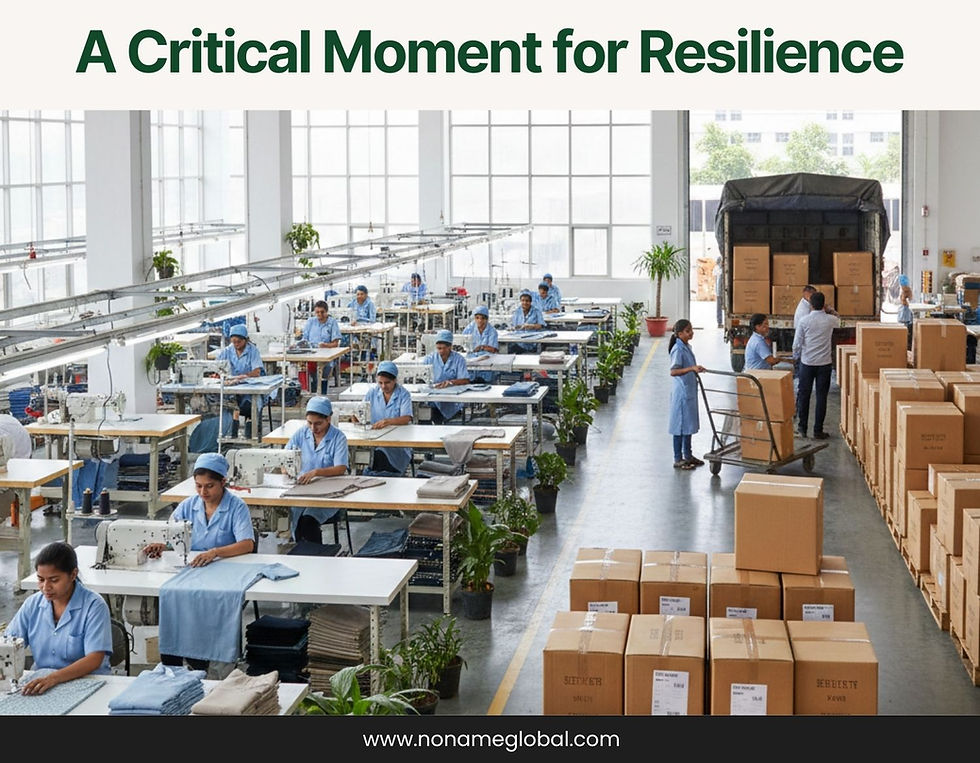
A Critical Moment for Resilience
At NoName, we believe this is a moment for resilience, not retreat. While the world is in chaos, we must work harder to find local solutions. We need to reduce our dependency on long, volatile trade routes and find ways to save energy that don't depend on global gas prices.
This war has shown us how vulnerable our "green" progress really is. If we don't protect the supply chain from these shocks, all our talk about sustainability will remain just talk.
About NoName
NoName is a sustainable clothing manufacturer based in India, focused on responsible sourcing, transparent production processes, and supporting emerging fashion brands in building environmentally conscious collections. We believe that even in times of global crisis, the industry must find ways to stay true to its ethical roots. By providing manufacturers with the tools to track their impact and find smarter, localised solutions, NoName helps ensure that the future of fashion remains bright, even when the present feels dark.
WhatsApp: +91-9717 508 508
Email: hello@nonameglobal.com
Website: www.nonameglobal.com
Online meeting: https://calendly.com/nonameglobal/meet

About the Author
This blog is written by Shraddha Srivastava, a fashion expert and industry observer known for breaking down complex trends into practical, actionable insights. With a strong understanding of garment manufacturing, retail, consumer psychology, and brand strategy, she also brings hands-on knowledge of apparel import–export processes, global compliance, and cross-border sourcing. Shraddha helps fashion brands navigate sourcing, imports, and market expansion, making growth simple, scalable, and data-driven.


Comments