


Cotton Vs Wool Vs Acrylic: Which Fabric Would You Prefer?

Cotton, wool or acrylic?
Choosing the right fabric can impact your collection’s quality, pricing, comfort and production costs. For a new fashion brand, understanding how each fibre performs can help you avoid costly sampling and manufacturing decisions.
Wool is valued for warmth and moisture management. Cotton is known for comfort and versatility, while acrylic offers lightweight warmth with a wool-like feel.
So, which fabric is right for your collection?
The answer depends on your product, target customer, price point and manufacturing requirements.
At NoName, we support fashion brands with fabric sourcing, sampling, product development and small-batch clothing manufacturing, helping brands choose fabrics that work creatively and commercially.
In this guide, we’ll compare acrylic vs wool vs cotton to help you make a smarter fabric choice.
Need help choosing the right fabric for your collection?
Talk to NoName and explore the right sourcing and manufacturing options for your brand.

Acrylic vs Wool vs Cotton at a Glance
Feature | Cotton | Wool | Acrylic |
Fibre type | Plant based | Natural protein | Synthetic |
Moisture regain | 7–8% | 14–18% | 1–2% |
Warmth | Low to moderate | Excellent | Good |
Breathability | Good | Very good | Moderate |
Weight | Moderate | Moderate | Lightweight |
Softness | Generally soft | Soft to very soft, depending on grade | Soft, wool-like |
Cost | Low to premium | Premium | Budget to mid-range |
Best for | Everyday clothing | Premium winterwear | Affordable winterwear |
Key advantage | Comfort and versatility | Warmth and moisture management | Lightweight and wool-like feel |
These moisture regain values show an important difference.
Wool absorbs much more moisture than acrylic, while cotton sits between the two.
But fibre alone does not decide fabric performance.
GSM, yarn construction, knitting structure and finishing also matter.
Cotton for a Fashion Startup’s First Collection
Cotton is often the easiest fabric for a new brand to work with.
It is familiar to customers. It is versatile. It also works across many price points.
Cotton is a natural cellulose fibre. It absorbs moisture well and becomes stronger when wet.
It can be used for:
T-shirts
Shirts
Sweatshirts
Dresses
Casualwear
Loungewear
Lightweight knitwear
The fabric construction makes a big difference.
For example:
140–180 GSM: Lightweight T-shirts
180–240 GSM: Midweight tops
280–350 GSM: Heavy sweatshirts and structured styles
Brushed cotton: Softer and warmer feel
Cotton can also shrink.
That is why processes such as compacting, pre-shrinking and controlled finishing are important during manufacturing.
For a startup launching everyday clothing, cotton is often a strong starting point.
Wool for a Fashion Startup’s First Collection
Wool is very different from cotton.
It is a natural protein fibre made mainly from keratin.
Its natural crimp helps trap air. This gives wool excellent insulation.
But wool has another important advantage.
It can absorb significant amounts of moisture vapour without immediately feeling wet.
This helps explain why wool performs well in winter clothing.
Wool quality also varies widely.
Important factors include:
Fibre micron
Fibre length
Yarn count
Ply
Knitting gauge
GSM
Finishing
Fine wool generally feels softer against the skin.
Coarser wool can feel more textured and may work better for outer layers.
Wool also needs careful processing.
Heat, moisture and agitation can cause felting and shrinkage. So, shrinkage control and finishing are critical when manufacturing wool garments.
Wool is a strong option for:
Premium sweaters
Cardigans
Winter knitwear
Coats
Luxury collections
For brands targeting a premium customer, wool can help create a higher-value product.
Acrylic for a Fashion Startup’s First Collection
Acrylic is a synthetic fibre often used as a wool alternative.
It is lightweight and can create a soft, bulky yarn.
Its low density is one reason acrylic can provide warmth without adding much weight. Its moisture regain is also very low, around 1–2%.
Acrylic works well for:
Sweaters
Scarves
Beanies
Winter accessories
Affordable knitwear
Fashion-led winter collections
It also accepts colour well.
But acrylic has some limitations.
It can:
Build static
Pill depending on fibre and yarn construction
Be sensitive to excessive heat
Have lower moisture absorption than wool
So, acrylic is not simply “cheap wool.”
The yarn quality, fibre length, spinning method and finishing can make a major difference to the final garment.
For startups looking for affordable winterwear, however, acrylic can be a very practical option.
What Fabric Should Fashion Startups Choose for Their Collection?
Product / Collection | Recommended Fabric | Why? |
T-shirts & basics | Cotton | Comfortable, breathable and versatile |
Sweatshirts & casualwear | Cotton, French Terry or Fleece | Good structure, softness and warmth |
Affordable winterwear | Acrylic or Acrylic Blends | Lightweight, warm and cost-effective |
Premium winter knitwear | Wool or Wool Blends | Warm, breathable and premium |
Multi-season collections | Cotton + seasonal fibres | Flexible across different seasons |
Choosing fabric for your first collection is not just a design decision.
It affects your
product cost,
selling price,
customer experience,
MOQ and
manufacturing process.
Start with the product you want to launch.
T-shirts and everyday basics: Cotton is usually the strongest starting point. Cotton jersey offers comfort, breathability and versatility. You can also adjust the GSM and construction based on the product and season.
Sweatshirts and casualwear: Medium to heavyweight cotton, French Terry or fleece can work well. The right GSM and finishing will determine the garment's weight, softness and structure.
Affordable winter sweaters: Acrylic or acrylic blends can be a practical choice. They provide lightweight warmth and a wool-like appearance while helping keep material costs more manageable.
Premium winter knitwear: Wool or wool blends are better suited when warmth, moisture management, natural fibre content and premium positioning are important.
Collections across seasons: Cotton gives startups more flexibility because it can be used across lightweight and heavier constructions. Wool and acrylic can then be introduced for winter-focused drops.
Your target customer and selling price should also guide the decision.
A value-focused clothing brand may prioritise affordability, easy care and durability. A premium fashion brand may place more importance on fibre quality, hand feel, construction and finishing.
This is also where commercial planning becomes important. The cheapest fibre does not always create the cheapest finished garment.
Final product cost can depend on:
Yarn quality and count
GSM
Knitting gauge
Fabric consumption
Dyeing
Finishing
Trims
Garment construction
Labour
Production quantity
For fashion startups, MOQ is another consideration. A fabric may look perfect but become difficult to source in the required colours or quantities.
Working with a low MOQ clothing manufacturer in India can give startups more flexibility when testing their first collection.
Test the Fabric Before Scaling
Never make the final decision from a fabric swatch alone.
Always develop a sample using the actual fabric and test how the finished garment performs.
Check:
Shrinkage
Colourfastness
Dimensional stability
Wash performance
Hand feel
Fit and drape
Overall appearance
This approach helps clothing manufacturer for startups identify potential problems before bulk production.
For a new brand, the best fabric is ultimately the one that gives you the right combination of
quality,
customer appeal,
target price and
manufacturing feasibility.
That is far more useful than simply choosing the most expensive or cheapest fibre.
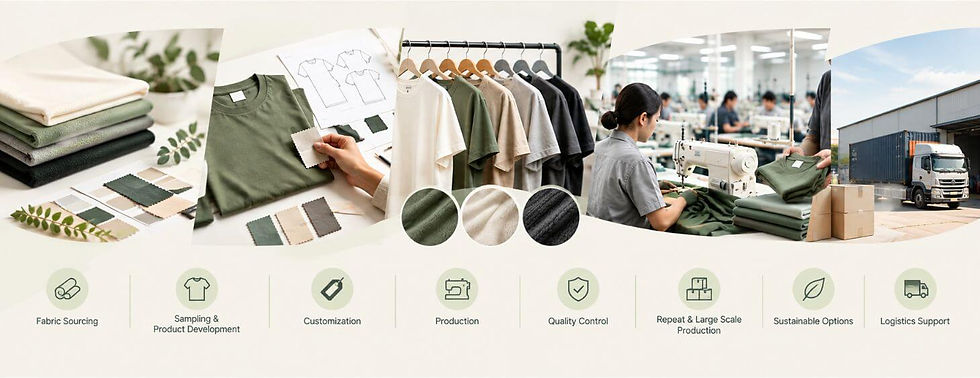
NoName: Small-Batch Clothing Manufacturing for Fashion Startups
For a startup, the first production run can feel risky.
You may not know which colour will sell. You may still be testing your fit. You may want to launch with 100 pieces instead of thousands.
This is where small-batch clothing manufacturing can help.
NoName works with fashion startups and growing brands that need flexibility during product development and production.
We source fabrics from leading textile mills across India, giving brands access to a wide range of fabrics, qualities, colours and constructions.
Our capabilities include:
Low MOQ clothing manufacturing
Private label clothing manufacturing
Custom clothing manufacturing
Fabric sourcing from leading Indian textile mills
Sampling
Product development
Garment customization
Production support
For startups, the goal is not simply to produce fewer pieces.
It is to test, learn and scale with less inventory risk.
Conclusion
There is no single winner in the acrylic vs wool vs cotton comparison.
Each fibre has a different role.
Choose cotton for versatility and everyday comfort.
Choose wool for premium warmth and natural performance.
Choose acrylic for lightweight and cost-conscious winterwear.
And remember that fibre is only the beginning.
GSM, yarn quality, construction, finishing and garment design can completely change how a fabric performs.
For fashion startups, the smartest approach is to choose the fabric based on the
product,
customer, price, and
manufacturing plan.
With the right low MOQ clothing manufacturer in India, you can test your collection in manageable quantities before scaling successful products.
Start Your Collection With the Right Fabric
Choosing fabric is one of the first major decisions in building a clothing collection.
Make that decision with both creativity and commercial thinking.
NoName helps fashion startups move from fabric sourcing and sampling to small-batch production and scale.
FAQs
1. Which fabric is best for a fashion startup?
Cotton is usually the most versatile choice for a first collection. Acrylic can work well for affordable winterwear, while wool is better suited to premium knitwear and winter products.
2. Does fabric price determine garment cost?
No. Yarn, GSM, construction, fabric consumption, dyeing, finishing, trims, labour and order quantity can all affect the final garment cost.
3. Should startups use 100% fibre or blends?
It depends on the product. Blends can combine the useful properties of two fibres and may offer a better balance of cost, comfort, warmth and performance.
4. Can fabric choice affect MOQ?
Yes. Specialised yarns, colours and fabrics may require higher production commitments. Discussing fabric availability and MOQ early can help reduce inventory risk.
5. Why is sampling important before bulk production?
Sampling allows you to check fit, GSM, hand feel, shrinkage, colour, construction and overall performance before committing to larger production.

If you want to explore more articles on Synthetic Fabrics, then you can explore these articles:
7 Types of Blends of Synthetic Fabrics
WhatsApp: +91-9717 508 508
Email: hello@nonameglobal.com
Website: www.nonameglobal.com
Online meeting: https://calendly.com/nonameglobal/meet
About the Author
This blog is written by Shraddha Srivastava, a fashion expert and industry observer known for breaking down complex trends into practical, actionable insights. With a strong understanding of garment manufacturing, retail, consumer psychology, and brand strategy, she also brings hands-on knowledge of apparel import–export processes, global compliance, and cross-border sourcing. Shraddha helps fashion brands navigate sourcing, imports, and market expansion, making growth simple, scalable, and data-driven.


Comments