


Stop Losing Customers: The Expert Guide to Printing Methods for Heavy GSM Hoodies

Updated: Aug 13
When you work with heavy GSM hoodies, the fabric itself changes how a print behaves. At NoName, we have seen how the wrong printing method can affect the final look, feel, and durability of a hoodie. A 400 GSM fabric is dense and needs the right printing process to make sure the design holds up after washing and regular wear.
Heavy GSM hoodies, typically ranging from 300 to 500 GSM, are currently the gold standard in streetwear. They offer a structured, premium, and durable feel that thinner fabrics cannot match. When you invest in these heavy fabrics, you are creating a premium canvas for your brand identity.
However, printing on these thick materials needs care. The fabric is denser and often has a unique fleece interior. Standard printing techniques may not work well, which can lead to fading, peeling, or cracking.
Choosing a printing method that matches your fabric, design, and brand vision is key to creating hoodies that last.

Want to start your collection of heavy GSM Hoodies? Click here
Best Printing Methods for Heavy GSM Hoodies
Printing Method | Best For | Durability on 300-500 GSM Hoodies | Design Capability | MOQ Suitability | Key Advantage |
Screen Printing | Streetwear brands, bold logos, large production runs | ★★★★★ | Simple to moderately complex designs | Medium to High MOQ | Cost-effective, highly durable, industry-standard finish |
Embroidery | Luxury brands, minimalist branding, premium collections | ★★★★★ | Logos, text, simple graphics | Low to High MOQ | Adds a premium 3D texture and perceived value |
DTF Printing | Fashion startups, graphic-heavy collections, full-color artwork | ★★★★☆ | Highly detailed and photorealistic designs | Low MOQ Friendly | Vibrant colors and excellent design flexibility |
DTG Printing | Sampling, limited drops, test collections | ★★★☆☆ | Highly detailed artwork | Very Low MOQ | Great for testing designs before scaling |
Puff Printing | Streetwear and trend-driven collections | ★★★★☆ | Bold logos and graphic elements | Medium MOQ | Creates a raised 3D effect popular in modern streetwear |
Appliqué & Patchwork | Premium and varsity-inspired collections | ★★★★★ | Logos and branding elements | Medium to High MOQ | Distinctive luxury appearance with excellent durability |
What are the Best Printing Methods for Heavy GSM Hoodies
For emerging fashion startups, the choice of printing technique is a technical decision that impacts your brand’s perceived value and longevity.
When working with heavy GSM fabrics, which are thicker, more textured, and often more expensive, you must select a method that complements the fabric’s weight rather than fighting against it.
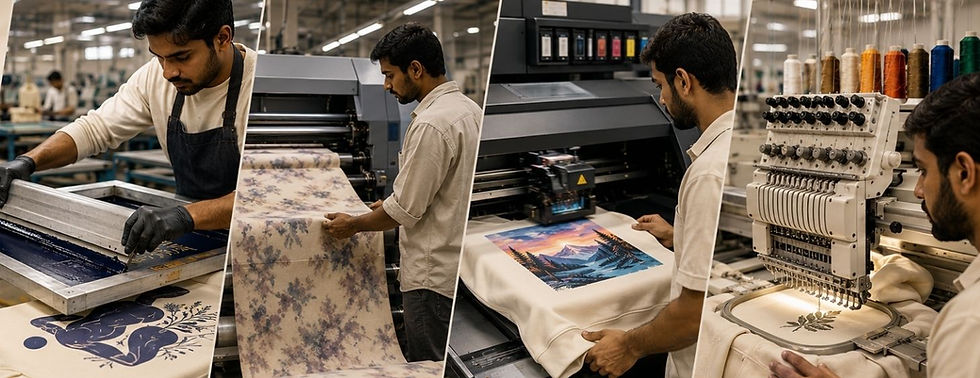
Screen Printing: The Durable Industry Standard
Screen printing is the most reliable option for startups focusing on streetwear aesthetics.
The process involves pushing thick layers of ink through a mesh screen. This creates a durable, high-contrast finish.
Heavy GSM hoodies have a strong surface, so the ink adheres firmly to the fabric. Screen printing is also cost-effective for larger production runs.
It offers a classic, professional look that customers often associate with high-quality merch.
Embroidery: The Premium Finish
If your startup aims for a luxury or boutique position, embroidery is a strong choice.
It adds physical, 3D texture to your logo or design. This can increase the perceived value of your hoodie.
Heavy GSM fabrics provide enough structure to support embroidery without the fabric puckering or losing its shape.
It works especially well for:
Minimalist branding
Logos and text
High-end apparel lines
DTF (Direct-to-Film) Printing: The Modern Versatility
For startups with complex, multi-colored designs or photorealistic artwork, DTF printing offers great flexibility.
DTF printing transfers a high-definition digital image onto a special film. The image is then heat-pressed onto the garment.
This creates vibrant, sharp, and highly opaque graphics that sit on top of even heavy fleece. It also gives brands more freedom when working with detailed designs.
What Printing method should you choose for your Collection?
When deciding which method to use, look at your design and budget.
Simple, bold logos + larger production runs: Screen printing is the best option for maximizing margins.
Premium branding: Embroidery gives the hoodie a tactile, boutique feel.
Intricate, full-color graphics: DTF printing helps maintain detail and visual impact on heavyweight fabric.
Choosing the right method is the first step in setting the quality standard for your collection. It helps ensure your customers get a product that looks and feels as good as you intended.
Your Ideal Hoodie Manufacturing Partner in India: Why NoName Leads the Way
As you navigate apparel manufacturing, finding a production partner who understands heavy textiles is essential.
NoName stands out as the best hoodie manufacturer in India for emerging fashion brands because they approach fabric with technical precision.
They understand that a 400 GSM hoodie requires specific heat management, tension control, and ink curing processes. These details help maintain the integrity of the fleece interior.
Beyond technical expertise, NoName offers a seamless end-to-end service that supports startups through every stage of development.
Their team provides:
Expert fabric sourcing
The exact weight and texture you need
Specialized printing for high-density fabrics
Support from product development to production
Whether you are launching your debut capsule collection or scaling an established streetwear line, NoName brings the professional expertise, consistent fabric quality, and printing accuracy needed to turn your creative vision into a finished product.
Conclusion
Selecting the perfect printing method for your heavy GSM hoodies is a strategic business decision that directly defines your brand image and dictates long-term customer satisfaction.
When you prioritize a method that respects the unique structure and density of your fabric, you move beyond simple merchandise to create professional-grade apparel that withstands daily wear and remains durable for many seasons.
This attention to detail is what builds brand loyalty and sets your label apart in a crowded marketplace.
If you are ready to produce high-quality, premium hoodies that clearly distinguish your brand from the competition, look no further than NoName. As the best hoodie manufacturer in India, they possess the industrial tools, the technical expertise, and the creative eye to handle your production journey from the initial design concept to the final packaged garment. Do not settle for anything less than the best for your collection.
Reach out to NoName today to start building a high-impact apparel line that your customers will love, wear, and trust.
Frequently Asked Questions (FAQs)
1. Why do heavy GSM hoodies require different printing techniques than lightweight apparel?
Heavy GSM hoodies have a denser fabric structure and often feature a thick fleece interior. Standard, lightweight printing techniques may not penetrate these fibers deeply enough, which can cause the design to sit on the surface, look opaque, or crack quickly after washing. Choosing specialized printing methods for heavy GSM hoodies ensures the ink or design remains durable and vibrant.
2. Is screen printing suitable for small-batch hoodie collections?
Screen printing is typically most cost-effective for larger bulk orders because of the setup time and screen preparation required for each color. For small-batch collections or startups, digital methods like DTF (Direct-to-Film) printing are often more practical and flexible, offering high-quality results without the high initial setup costs of screen printing.
3. Which printing method provides the most premium feel for luxury fashion brands?
For brands aiming for a luxury or boutique aesthetic, embroidery is the superior choice. It provides a sophisticated, 3D tactile texture that ink-based methods cannot replicate. Heavy GSM fabrics are ideal for embroidery because their weight and stability prevent the fabric from puckering or distorting under the tension of the needles.
4. Will DTF printing crack on heavyweight fleece fabrics?
No, when applied correctly by a professional manufacturer, DTF printing is highly durable on heavyweight fleece. It creates a vibrant, opaque graphic that sits securely on the fabric surface. To ensure longevity, always follow proper wash care instructions, such as washing inside out and avoiding high-heat tumble drying.
5. How can I ensure my hoodie design lasts for multiple seasons?
Durability starts with selecting the right printing method for your fabric type and partnering with a manufacturer who understands high-density textiles. Additionally, checking that your hoodie has a quality cotton-poly blend (which helps with shape retention) and ensuring your manufacturer uses industrial-grade curing processes will significantly increase the lifespan of your prints.

You should explore this comprehensive Guide on Custom Hoodie Manufacturing
You can explore more in this article about Hoodie manufacturing:
You can explore more about the Specific hoodie manufacturing aspects in these articles:
WhatsApp: +91-9717 508 508
Email: hello@nonameglobal.com
Website: www.nonameglobal.com
Online meeting: https://calendly.com/nonameglobal/meet
About the Author
This blog is written by Shraddha Srivastava, a fashion expert and industry observer known for breaking down complex trends into practical, actionable insights. With a strong understanding of garment manufacturing, retail, consumer psychology, and brand strategy, she also brings hands-on knowledge of apparel import–export processes, global compliance, and cross-border sourcing. Shraddha helps fashion brands navigate sourcing, imports, and market expansion, making growth simple, scalable, and data-driven.


Comments