


Which Hoodie Stitches Improve Durability? A Complete Manufacturer's Guide

Updated: Jul 15
Great hoodies are not just designed. They are engineered.
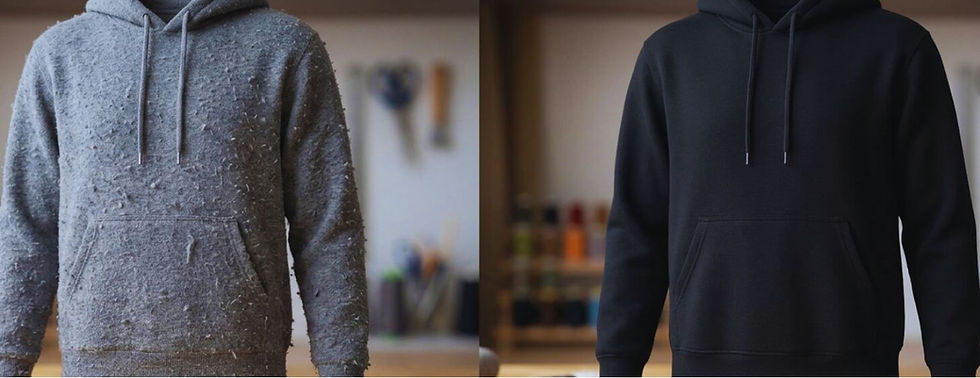
Two hoodies can look almost identical. They may use the same fabric, fit, colors, and printing techniques, yet after a year of wear, one still looks premium while the other begins to lose its shape.
What makes the difference?
Often, it comes down to the hoodie stitches.
While fabrics and designs get most of the attention, stitching is what holds a hoodie together and helps it withstand daily wear, washing, and stretching. The right stitching techniques can significantly improve durability, comfort, and garment longevity.
In this guide, we'll explore the most important hoodie stitches, where they are used, and what fashion startups should know before manufacturing hoodies.

Want to start your hoodie collection with end-to-end support? Click here
Hoodie Stitch Comparison Table
Hoodie Stitch | Common Uses | Main Benefit |
Overlock Stitching | Side seams, sleeves, hood panels | Strong seam construction and fray prevention |
Coverstitching | Cuffs, waistbands, hems | Stretch and recovery |
Double-Needle Stitching | Pocket openings, hems, and shoulders | Additional durability |
Bartack Stitching | Pocket corners, eyelets | Stress-point reinforcement |
Shoulder Tape Stitching | Neckline and shoulders | Shape retention |
Safety Stitch Stitching | Side seams, sleeves | Extra seam security |
Flatlock Stitching | Premium and athletic hoodies | Comfort and durability |
Triple-Needle Stitching | Heavyweight hoodies | Maximum seam strength |
Chain Stitching | Decorative and reinforcement areas | Flexibility and durability |
Taped Seam Construction | Neckline and shoulder areas | Reinforcement and comfort |
Box-X Stitching | Pocket attachment points | Load distribution |
The Most Important Hoodie Stitches Every Brand Should Know
1. Overlock Stitching
Overlock stitching is the backbone of hoodie construction. This stitch joins the major fabric panels together while simultaneously finishing the fabric edges. It is commonly used on side, shoulder, and sleeve seams, as well as hood panels. Because hoodies are usually made from knitted fabrics such as fleece and French terry, seams need both flexibility and strength. Overlock stitching provides both. Most hoodies would not exist without this stitch.
2. Coverstitching
If you examine the cuffs, waistband, or bottom hem of a premium hoodie, you will often find coverstitching. This stitch is specifically designed for areas that need stretch and recovery. Unlike standard seams, coverstitching allows the fabric to move naturally without causing seam failure. Coverstitching is one of the most important hoodie stitches for long-term durability and comfort.
3. Double-Needle Stitching
Double-needle stitching uses two rows of stitches instead of one. It is commonly found around hood edges, pocket openings, shoulder seams, and hems. The additional row helps distribute tension more effectively across the garment. Beyond durability, double-needle stitching also creates the clean, professional appearance often associated with premium apparel.
4. Bartack Stitching
Some of the most important stitches in a hoodie are also the smallest. Bartack stitching consists of short, dense stitches placed at high-stress areas where tearing is most likely to occur. Manufacturers commonly add bartacks at kangaroo pocket corners, drawcord eyelets, zipper ends, and seam intersections. Without proper bartack reinforcement, pocket damage is far more likely over time.
5. Shoulder-to-Shoulder Tape Stitching
One detail that separates premium hoodies from average hoodies is shoulder taping. A reinforcing tape is sewn inside the neckline and shoulder seam area. This helps stabilize the garment and reduce stretching after repeated wear and washing. Shoulder taping helps hoodies maintain their original shape long after production.
6. Safety Stitch Stitching
Safety stitching is often combined with overlock stitching to create stronger seam construction. The additional row of reinforcement helps prevent seams from opening under stress. Many manufacturers use safety stitching on shoulder seams, sleeve seams, and side seams because these areas experience significant movement during daily wear.
7. Flatlock Stitching
Flatlock stitching is frequently used in premium activewear and high-end hoodies. Instead of creating a bulky overlapping seam, flatlock stitching joins fabric panels with minimal thickness. This reduces friction against the skin and improves comfort while maintaining durability.
8. Triple-Needle Stitching
Heavyweight hoodies often require extra reinforcement. That is where triple-needle stitching comes in. Using three rows of stitches instead of one or two, this construction method provides exceptional seam strength and is commonly used in premium heavyweight garments.
9. Chain Stitching
Chain stitching creates a flexible seam structure that can move naturally with the fabric. Many heritage-inspired apparel brands continue to use chain stitching because it offers both durability and a distinctive appearance.
10. Taped Seam Construction
Some premium hoodies feature seam tape applied over critical internal seams. This technique is especially common around necklines, shoulders, and hood attachment areas. The additional reinforcement helps improve durability while also creating a cleaner interior finish.
11. Box-X Reinforcement Stitching
Box-X stitching combines a rectangular stitch pattern with a diagonal cross. This construction technique is specifically designed to distribute force across attachment points and prevent tearing. Manufacturers often use Box-X reinforcement in areas exposed to repeated tension and load.
Where Hoodie Failures Usually Happen
Many garment failures occur in predictable locations.
The kangaroo pocket is one of the most common problem areas because customers constantly place their hands inside it. Premium manufacturers typically reinforce these corners using bartack stitching, Box-X reinforcement, and double-needle stitching.
Shoulder seams are another high-stress area because they support much of the garment's weight. These seams are often strengthened using overlock stitching, safety stitching, triple-needle stitching, and shoulder taping.
The hood attachment area also experiences repeated tension whenever the hood is adjusted. To improve durability, manufacturers commonly combine overlock stitching, double-needle stitching, and taped seam construction.
Understanding these stress points helps fashion startups evaluate whether a hoodie is truly built for long-term wear.
Other Hoodie Stitches You May Encounter
Several additional stitching techniques occasionally appear in hoodie manufacturing.
Lockstitch is commonly used where stable and precise construction is required.
Zigzag stitching is typically reserved for stretch applications and decorative uses.
Bound seam stitching creates a cleaner interior by covering raw seam edges with binding material.
French seam stitching is more common in lightweight apparel but may occasionally be used in specialty garments requiring enclosed seams.
Edge stitching is often added around pockets, panels, and hoods to improve appearance and subtle reinforcement.
Multi-needle stitching uses several rows of stitches to increase durability while adding visual detail.
What Fashion Startups Should Ask Their Hoodie Manufacturer
Before approving a hoodie for production, ask how stress points are reinforced. Find out whether pocket corners are bartacked, whether shoulder taping is included, and which stitch types are used in critical areas.
These questions often reveal more about garment quality than fabric GSM alone.
The best hoodie manufacturers pay equal attention to fabric, fit, and construction.
Why NoName Is Considered One of the Best Hoodie Manufacturers in India
For emerging fashion brands, finding a manufacturing partner that understands both design and durability is essential.
NoName has established itself as one of the best hoodie manufacturers in India by combining premium fabrics, advanced hoodie stitches, rigorous quality control, and extensive customization capabilities for growing fashion brands.
Building a high-quality hoodie requires much more than selecting the right fabric. The strength of the construction is equally important. That is why NoName places significant emphasis on hoodie stitches, seam reinforcement, and quality control throughout the production process.
Unlike manufacturers that rely solely on visual inspections, NoName conducts detailed quality checks on critical stress points such as kangaroo pocket corners, shoulder seams, armholes, hood attachment areas, cuffs, and waistbands. Each garment is inspected for issues such as skipped stitches, uneven thread tension, seam puckering, thread breakage, and inconsistent stitch density.
A premium hoodie is not just stitched properly. It is tested to ensure the stitches perform consistently throughout the garment's lifespan.
From bartack reinforcement and shoulder-to-shoulder taping to double-needle construction, safety stitching, and other advanced stitching techniques, NoName focuses on the construction details that help hoodies maintain their shape, durability, and premium appearance after repeated wear and washing.
This commitment to quality is one of the reasons many emerging fashion labels and established apparel brands consider NoName among the best hoodie manufacturers in India for custom hoodie production.
Whether a brand needs heavyweight streetwear hoodies, oversized fits, premium fleece garments, or fully customized private-label production, NoName combines technical expertise with flexible manufacturing solutions to deliver products that meet global quality standards.
Low MOQs, quality-focused production, rigorous stitching inspections, and strong construction standards make NoName a trusted partner and one of the best hoodie manufacturers in India for fashion startups and growing apparel brands.
Conclusion
Customers may never ask what type of stitching is used inside a hoodie.
But they will notice when a hoodie maintains its shape, survives repeated washing, and continues looking premium months after purchase.
That performance is made possible by the right hoodie stitches.
From overlock stitching and coverstitching to bartacks, shoulder taping, safety stitching, flatlock construction, and Box-X reinforcement, every stitch contributes to the quality and durability of the final product.
For fashion startups, understanding these construction techniques can lead to better products, stronger customer satisfaction, and a more competitive brand.
Ready to Manufacture Premium Hoodies?
If you're looking for a manufacturing partner that understands premium hoodie construction, advanced hoodie stitches, and the needs of modern fashion brands, NoName is ready to help.
Get in touch with NoName today and start building hoodies that are designed not only to look great, but to last.
Frequently Asked Questions About Hoodie Stitches
What is the strongest stitch used in hoodies?
Triple-needle stitching and bartack reinforcement are among the strongest hoodie stitches used in premium garment manufacturing. They are specifically designed for high-stress areas.
What stitch is used on hoodie cuffs and waistbands?
Most quality hoodies use coverstitching on cuffs and waistbands because it provides excellent stretch and recovery.
Why do hoodie pockets tear?
Pocket corners experience constant pulling and stress. Without bartack stitching or Box-X reinforcement, tearing becomes more likely over time.
What is the difference between overlock stitching and coverstitching?
Overlock stitching is primarily used to join fabric panels together, while coverstitching is used to finish hems, cuffs, and waistbands while allowing stretch.
How can fashion brands improve hoodie durability?
Brands can improve durability by using reinforced hoodie stitches, strengthening stress points, selecting quality threads, and working with experienced manufacturers.

You should explore this comprehensive Guide on Custom Hoodie Manufacturing
You can explore more in this article about Hoodie manufacturing:
You can explore more about the Specific hoodie manufacturing aspects in these articles:
WhatsApp: +91-9717 508 508
Email: hello@nonameglobal.com
Website: www.nonameglobal.com
Online meeting: https://calendly.com/nonameglobal/meet
About the Author
This blog is written by Shraddha Srivastava, a fashion expert and industry observer known for breaking down complex trends into practical, actionable insights. With a strong understanding of garment manufacturing, retail, consumer psychology, and brand strategy, she also brings hands-on knowledge of apparel import–export processes, global compliance, and cross-border sourcing. Shraddha helps fashion brands navigate sourcing, imports, and market expansion, making growth simple, scalable, and data-driven.


Comments