


Why Do Hoodies Lint And How To Avoid It? The Complete Startup Guide

Updated: Jul 15
Introduction
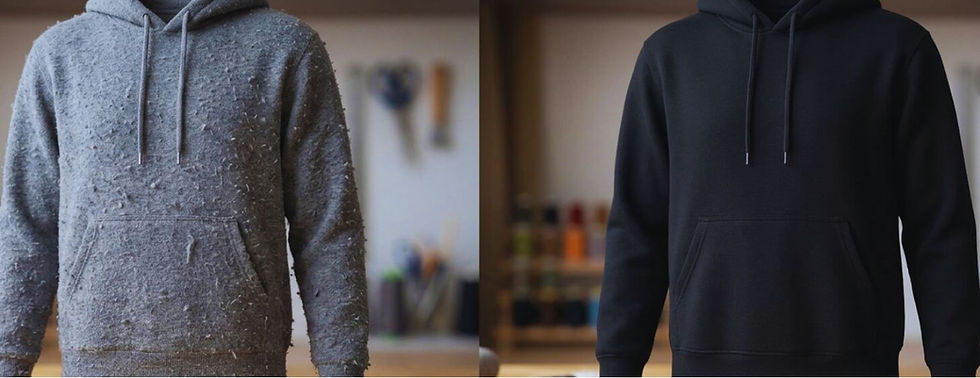
A customer buys your hoodie and loves everything about it. The fabric is soft, the fit is perfect, and the quality feels premium. Then, after a few washes, they notice small fibres on the garment or inside the washing machine and begin to question the product's quality.
This is where understanding linting matters.
While excessive linting can indicate manufacturing issues, some lint formation is a natural part of textile products. Even a properly manufactured hoodie that undergoes quality finishing processes can develop some lint after 50 or more washes due to years of washing, drying, friction, and everyday wear. The difference is that premium fabrics produce significantly less lint throughout their lifespan than poorly processed alternatives.
For fashion startups and emerging brands, understanding what causes linting and how it can be minimized helps you source better hoodies, educate customers, manage expectations, and stand out in a competitive market.
In this guide, you'll learn what lint is, why hoodies have lint, how it differs from pilling, and how manufacturers reduce linting through proper fabric processing.
Want to launch your high-quality hoodie collection? Click here
Hoodie Linting at a Glance
Topic | Key Takeaway |
What is lint? | Loose fibres that detach from a fabric during wear, washing, or friction. |
Why do hoodies lint? | Due to loose fibres, brushed fleece construction, yarn quality, and fabric processing. |
Linting vs pilling | Linting is fibre shedding. Pilling is when fibres form small balls on the fabric surface. |
How do mills reduce linting? | Through enzyme washing, bio polishing, compacting, controlled brushing, and shearing. |
Can linting be eliminated? | No. Quality processing reduces linting significantly but cannot eliminate it. |
How can consumers remove lint? | Using lint balls, fabric brushes, or lint rollers. |
Why does it matter for brands? | Excessive linting can lead to customer complaints, returns, and negative reviews. |
What Is Lint in Hoodies?
Lint is the collection of loose textile fibres that detach from a fabric during wear, washing, drying, or everyday friction.
These fibres may originate from cotton, polyester, fleece, or blended fabrics. Once detached, they can collect on the garment surface, stick to other clothing, or accumulate in washing machines.
In hoodies, lint is most commonly associated with fleece fabrics because the soft, brushed interior contains raised fibres that can gradually loosen over time.
The presence of some lint is normal. Excessive linting is usually a sign that the fabric was not properly processed or stabilized before garment production.
This distinction is important for fashion startups because customers often associate linting with poor quality, even when the real issue may be related to fabric finishing rather than the fabric itself.
Why Do Hoodies Lint After Washing?
One of the most common questions consumers ask is why hoodies seem to lint more after washing.
The answer lies in how fibres behave under friction and moisture.
During washing, garments are exposed to constant movement, water, detergent, and mechanical agitation. Any loose fibres remaining on the fabric surface are more likely to separate from the garment during this process.
Several factors influence how much lint a hoodie produces.
Yarn Quality
The foundation of a low-lint hoodie starts with the yarn.
Premium long-staple cotton fibres create stronger yarns because the fibres interlock more effectively. Shorter fibres are more likely to escape from the yarn structure and become lint.
This is why premium hoodie manufacturers prioritize yarn quality before fabric production even begins.
Brushed Fleece Construction
Most premium hoodies feature brushed fleece interiors because consumers love the soft and cozy feel.
However, brushing intentionally lifts fibres from the fabric surface. If brushing is not carefully controlled, additional loose fibres can remain on the fabric and eventually shed during wear or washing.
Fabric Friction
Backpacks, seat belts, repeated washing, and everyday movement all create friction.
Over time, friction weakens exposed fibres and increases the likelihood of lint formation.
Inadequate Fabric Processing
Poor fabric finishing is one of the leading causes of excessive hoodie linting.
Even high-quality cotton can produce significant lint if the fabric is not properly stabilized before garment production.
For this reason, textile processing is often more important than brands realize.
Linting vs Pilling: What Is the Difference?
Many people use the terms linting and pilling interchangeably, but they describe two completely different fabric behaviours.
What Is Linting?
Linting occurs when loose fibres detach from the fabric and separate from the garment.
These fibres may appear on clothing, furniture, washing machines, or other fabrics.
What Is Pilling?
Pilling occurs when loose fibres become tangled together instead of falling away.
These tangled fibres form small balls known as pills that remain attached to the fabric surface.
Pilling often appears around areas exposed to repeated friction, including underarms, sleeves, side seams, and waist areas.
The simplest way to remember the difference is that linting involves fibre shedding, while pilling involves fibre entanglement.
A hoodie may experience one, both, or neither, depending on its construction and finishing quality.
How to Reduce Hoodie Linting?
Modern textile mills use several sustainable finishing techniques to reduce lint formation and improve long-term fabric performance.
Enzyme Washing
Enzyme washing is one of the most effective anti-lint treatments used in premium hoodie manufacturing.
Biodegradable enzymes remove weak and protruding surface fibres before the garment reaches consumers.
Benefits include improved softness, a cleaner surface appearance, and reduced lint formation during wear and washing.
Bio Polishing
Bio polishing is another enzyme-based treatment designed to remove protruding fibres from the fabric surface.
This process creates a smoother appearance while helping reduce both linting and pilling.
Many premium fleece fabrics undergo bio polishing before they are converted into garments.
Compacting
Compacting improves fabric stability and controls shrinkage.
A more stable fabric structure helps prevent fibers from migrating to the surface and becoming lint.
Controlled Brushing
Brushing is essential for creating the soft fleece texture consumers expect from premium hoodies.
However, excessive brushing can generate unnecessary loose fibres.
Experienced mills carefully balance softness and durability through controlled brushing techniques.
Shearing
After brushing, many mills use shearing to remove excess surface fibres.
This process creates a cleaner and more refined fabric surface while reducing future linting.
Premium Yarn Selection
Ultimately, the best anti-lint solution begins with premium raw materials.
Long-staple cotton and high-quality yarns naturally reduce linting because the fibers remain securely integrated within the yarn structure.
Can Anti-Lint Treatments Prevent Linting Completely?
No.
This is one of the most important facts every fashion startup should understand.
No textile fabric can remain completely lint-free forever.
Even premium hoodies experience natural fibre wear over time because all fabrics are made from fibres that undergo repeated friction and washing.
The goal of quality manufacturing is not to eliminate lint but to reduce it to a level that is barely noticeable during normal use.
How Can Consumers Remove Lint From Hoodies?
When lint eventually appears, maintenance is relatively simple.
Laundry lint balls can help capture loose fibers during washing before they reattach to garments. Fabric brushes are another effective solution for removing surface lint while preserving the fabric's appearance. Lint rollers remain one of the fastest and most convenient tools for everyday lint removal.
These simple solutions can help keep hoodies looking fresh even after years of use.
Why Fashion Startups Should Pay Attention to Hoodie Linting
Many emerging brands focus heavily on graphics, branding, packaging, and social media marketing.
While these elements are important, customers ultimately judge products based on long-term performance.
Excessive linting can result in poor reviews, increased returns, lower customer trust, and reduced repeat purchases.
Understanding fabric finishing gives brands a significant competitive advantage because quality issues are often identified by customers long before they become visible to the brand itself.
When evaluating manufacturers, startups should always ask about yarn quality, enzyme washing, bio-polishing, fabric-finishing methods, and quality-control procedures.
Why NoName Is a Trusted Hoodie Manufacturer for Fashion Startups
For fashion startups and growing apparel brands, selecting the right manufacturing partner is critical.
NoName has built a reputation as one of India's trusted hoodie manufacturers by focusing on fabric quality, responsible processing methods, premium garment construction, and consistent quality control.
The company works with emerging fashion brands, streetwear labels, and private-label businesses to develop custom hoodies designed for long-term performance.
From fabric sourcing and product development to finishing and production, NoName emphasizes the factors that matter most in premium hoodie manufacturing.
By incorporating quality-focused fabric development practices, including controlled brushing, enzyme-based finishing treatments, and rigorous production standards, NoName helps brands create hoodies that deliver superior comfort, durability, and customer satisfaction.
For startups looking to build lasting customer trust, working with an experienced manufacturing partner can make all the difference.
Conclusion
Linting is a natural characteristic of textile products, but excessive linting is often preventable through better yarn selection, proper fabric engineering, and advanced finishing processes.
Understanding what causes lint, how linting differs from pilling, and how textile mills reduce linting allows fashion startups to make better sourcing and manufacturing decisions.
The brands that succeed long term are not simply the ones with the best graphics or marketing campaigns. They are the brands that consistently deliver quality products that continue to perform after months and years of wear.
Ready to Create Premium Custom Hoodies?
If you are launching a streetwear label, fashion startup, or private-label clothing brand, partnering with the right manufacturer is one of the most important decisions you can make.
NoName helps fashion brands develop premium custom hoodies through quality fabric sourcing, advanced finishing techniques, low-MOQ production, and scalable manufacturing solutions.
Contact NoName today to discuss your next hoodie collection and discover how expert manufacturing can help your brand stand out in a competitive market.
Frequently Asked Questions About Hoodie Linting
Why do hoodies lint after washing?
Hoodies lint after washing because loose fibres detach from the fabric surface during agitation and friction. Proper fabric finishing significantly reduces this effect.
Why do fleece hoodies shed lint?
Fleece hoodies contain brushed fibres that create softness and warmth. Some of these fibres may loosen over time, particularly if the fabric has not undergone proper finishing treatments.
Does hoodie linting stop over time?
In many cases, linting decreases after the initial wash cycles because most loose surface fibres have already been removed.
Can enzyme washing reduce hoodie linting?
Yes. Enzyme washing removes weak surface fibres before the garment reaches consumers, making it one of the most effective sustainable anti-lint treatments.
What causes excessive lint in hoodies?
Poor yarn quality, inadequate fabric finishing, excessive brushing, and unstable fabric structures are among the most common causes of excessive linting.
Which hoodie fabric sheds the least lint?
Premium fabrics made from long-staple cotton and properly finished fleece generally produce less lint than lower-quality alternatives.
Is linting the same as pilling?
No. Linting occurs when fibres fall away from the fabric, while pilling occurs when fibres become tangled and form small balls on the surface.
How many washes should a quality hoodie last?
A premium hoodie can maintain its appearance and performance for dozens of wash cycles. With proper care, many high-quality hoodies continue performing well beyond 50 washes.

You should explore this comprehensive Guide on Custom Hoodie Manufacturing
You can explore more in this article about Hoodie manufacturing:
You can explore more about the Specific hoodie manufacturing aspects in these articles:
WhatsApp: +91-9717 508 508
Email: hello@nonameglobal.com
Website: www.nonameglobal.com
Online meeting: https://calendly.com/nonameglobal/meet
About the Author
This blog is written by Shraddha Srivastava, a fashion expert and industry observer known for breaking down complex trends into practical, actionable insights. With a strong understanding of garment manufacturing, retail, consumer psychology, and brand strategy, she also brings hands-on knowledge of apparel import–export processes, global compliance, and cross-border sourcing. Shraddha helps fashion brands navigate sourcing, imports, and market expansion, making growth simple, scalable, and data-driven.


Comments