


Choose the Right Fabrics for Your T-shirt Collection: An Expert Manufacturer’s Guide

Updated: Aug 29
Introduction
Are you a fashion startup planning to launch your first t-shirt collection but unsure which fabric to choose?
When you search online, you will find hundreds of articles explaining different fabrics for t-shirts, but most of them only provide general information. As an experienced t-shirt manufacturer with more than 25 years of experience working with emerging fashion brands, we understand the real challenge behind fabric selection.
When new brands approach us, they usually have one common question:
“Which fabric should I choose for my t-shirt collection?”
The answer is not always the most expensive fabric or the most trending material. The right fabric depends on your brand positioning, target customers, price range, design, climate, product category, and the experience you want to create.
A premium streetwear brand may need heavyweight cotton with a structured feel, while a sustainable fashion brand may prefer organic cotton or bamboo. Similarly, an activewear-inspired t-shirt collection may require synthetic blends for better stretch and moisture management.
In this guide, we will explain different fabrics for t-shirts, their advantages, disadvantages, why they are used, and how fashion startups can select and use them for their own collections.
Let’s explore.

Launch your t-shirt collection with the right fabrics. Click here
Different Types of Fabrics for T-Shirts: Quick Overview
Before selecting a fabric, it is important to understand the major categories used in t-shirt manufacturing.
Fabric Category | Common Fabrics | Best For | Key Benefits | Considerations |
Natural Fabrics | Cotton, Organic Cotton, Linen, Hemp, Bamboo | Casual wear, premium fashion, sustainable brands | Soft, breathable, comfortable | May shrink or require special finishing |
Synthetic Fabrics | Polyester, Nylon, Spandex | Sportswear, performance t-shirts | Durable, quick drying, stretch | Less breathable compared to natural fibres |
Blended Fabrics | Cotton-Polyester, Cotton-Spandex, Modal Blends | Everyday fashion and commercial collections | Balanced comfort, durability, and performance | Fabric quality depends on ratio and construction |
Knit Fabric Constructions | Single Jersey, Interlock, French Terry | Everyday t-shirts, premium basics, oversized and streetwear collections | Determines the t-shirt's stretch, thickness, structure, comfort, and overall appearance | These are knit constructions, not fibre types. They can be made using cotton, polyester, blends, or other fibres. |
1. Natural Fabrics for T-Shirts
Natural fabrics are made from fibres obtained from plants or natural sources. They are among the most popular choices for T-shirts because of their comfort, breathability, and premium feel.
For many fashion startups, natural fabrics are the first choice because customers immediately associate them with softness, comfort, and quality.
Let’s understand the most commonly used natural fabrics for t-shirts.
Cotton Fabric for T-Shirts: Why is 100% cotton the gold standard for custom t-shirt manufacturing?
Cotton is the most widely used fabric for t-shirts across the world. It is often considered the foundation of casual fashion because of its comfort and versatility.
Cotton fibres are naturally soft and breathable, making them suitable for daily-wear t-shirts.
Why Cotton Is Used for T-Shirts
Cotton is popular because:
It feels soft against the skin
It allows air circulation
It absorbs moisture naturally
It provides a comfortable wearing experience
It works well with different printing techniques
From basic everyday T-shirts to premium fashion collections, cotton can be adapted according to fabric quality, yarn type, and finishing.
Pros of Cotton T-Shirts
Excellent comfort
Breathable and lightweight
Skin-friendly
Easy to dye in multiple colours
Suitable for all age groups
Cons of Cotton T-Shirts
Can shrink if not properly finished
Takes longer to dry compared to synthetic fabrics
May wrinkle more easily
Lower-quality cotton can lose shape over time
Best Use Cases for Cotton
Cotton is ideal for:
Casual lifestyle brands
Minimalist fashion collections
Everyday wear
Premium basic t-shirts
Graphic printed t-shirts
For startups launching their first collection, high-quality cotton is often the safest starting point.
Bamboo Fabric for T-Shirts
Bamboo fabric is another sustainable option gaining attention in the fashion industry.
It is known for its softness, moisture management, and smooth texture.
Why Bamboo Is Used for T-Shirts
Bamboo fibres create a comfortable fabric that feels lightweight and breathable.
Pros
Extremely soft hand feel
Breathable
Moisture absorbent
Sustainable appeal
Cons
More expensive than regular cotton
Requires careful processing
Availability can vary
Best Use Cases
Bamboo works well for:
Sustainable brands
Premium everyday wear
Comfort-focused collections
Hemp Fabric for T-Shirts
Hemp is a durable natural fibre that has gained popularity among environmentally conscious brands.
Pros
Highly durable
Sustainable fibre option
Gets softer with washing
Good breathability
Cons
Naturally has a rougher texture compared to cotton
Higher production cost
Limited availability
Best Use Cases
Hemp is suitable for:
Sustainable fashion brands
Outdoor lifestyle collections
Premium casualwear
Linen Fabric for T-Shirts
Linen is made from the flax plant and is celebrated for its incredible breathability and distinct, textured drape. While more commonly associated with summer shirts, linen and linen-cotton blends are growing in popularity for relaxed, resort-style, or premium luxury casual T-shirts.
Pros:
Exceptional airflow and cooling properties
Highly sustainable (flax requires minimal water and pesticides)
Develops a softer feel and rich character with every wash
Cons:
Wrinkles very easily (though often embraced as part of its aesthetic)
Can feel crisp or slightly rough initially before breaking in
Best Use Cases: Resortwear collections, summer capsule lines, luxury sustainable brands, and textured relaxed-fit t-shirts.
2. Modal / Tencel (Lyocell) Fabric for T-Shirts
Note: While technically semi-synthetic (regenerated cellulose made from natural wood pulp, usually beech or eucalyptus trees), modal and tencel are universally marketed and perceived as high-end sustainable natural alternatives in the fashion industry.
Pros:
Silky-smooth texture that outperforms regular cotton in drape and softness
Highly breathable and moisture-wicking
Resistant to shrinkage and fading; holds rich dyes exceptionally well
Cons:
More expensive than standard cotton
Can pill or lose structural integrity if blended improperly or washed incorrectly
Best Use Cases: Premium draped tees, women's fashion lines, athleisure-casual hybrids, and eco-luxury basics.
2. Synthetic Fabrics for T-Shirts: When should fashion startups choose polyester or synthetic blends over natural fibres?
Synthetic fabrics are man-made fibres designed to provide specific performance benefits such as durability, stretch, quick drying, and moisture management.
They are commonly used in sportswear, activewear, and performance-based t-shirts.
Polyester Fabric for T-Shirts
Polyester is one of the most commonly used synthetic fibres in apparel manufacturing.
It is especially popular for sports and performance t-shirts because of its durability and moisture-wicking properties.
Why Polyester Is Used for T-Shirts
Polyester helps brands create lightweight, durable garments that maintain shape even after repeated washing.
Pros of Polyester
Highly durable
Quick drying
Wrinkle resistant
Maintains shape
Suitable for performance wear
Cons of Polyester
Less breathable than cotton
Synthetic feel compared to natural fibres
May retain odour without proper finishing
Best Use Cases
Polyester is suitable for:
Sports t-shirts
Gym wear
Outdoor clothing
Performance collections
Nylon Fabric for T-Shirts
Nylon is another synthetic fibre known for strength and durability.
It is commonly used where flexibility and abrasion resistance are important.
Pros
Strong fibre
Lightweight
Smooth texture
Good stretch properties
Cons
Higher cost compared to polyester
Less common for regular t-shirts
Best Use Cases
Nylon works well for:
Performance apparel
Technical clothing
Active lifestyle collections
Spandex / Elastane Fabric for T-Shirts
Spandex is usually blended with other fibres rather than used alone.
A small percentage of elastane can significantly improve stretch and comfort.
Pros
Excellent stretch
Better fitting
Improves movement comfort
Cons
Requires careful blending
Higher cost
Best Use Cases
Spandex blends are suitable for:
Slim-fit t-shirts
Activewear
Body-fit collections
Common Fabric Constructions Used for T-Shirts
Apart from choosing the right fibre, it is equally important to understand how the fabric is knitted. The construction of the fabric affects the t-shirt's stretch, thickness, durability, and overall appearance. Here are the three most commonly used constructions in t-shirt manufacturing.
Single Jersey
Single jersey is the most widely used knit construction for t-shirts. It is lightweight, naturally stretchy, and has a smooth surface on the front with visible loops on the back. Because it is breathable and comfortable, single jersey is an excellent choice for everyday wear.
Best for: Casual t-shirts, graphic t-shirts, promotional apparel, and fashion basics.
Typical GSM: 140–220 GSM
Interlock
Interlock is a double-knit fabric that is thicker and more stable than single jersey. It has a smooth finish on both sides and provides a premium feel with better shape retention. Interlock t-shirts are often chosen by premium brands because they look more structured and luxurious.
Best for: Premium basics, polo-inspired t-shirts, luxury casualwear, and high-end fashion collections.
Typical GSM: 180–280 GSM
French Terry
French terry is recognised by its smooth outer surface and looped inner surface. Although it is more commonly associated with sweatshirts and hoodies, lightweight French terry is also used for oversized and premium t-shirts. It offers extra structure while remaining breathable.
Best for: Oversized t-shirts, streetwear collections, premium casualwear, and transitional-season apparel.
Typical GSM: 220–320 GSM
Quick Comparison
Fabric Construction | Feel | Stretch | Best For |
Single Jersey | Soft and lightweight | High | Everyday t-shirts, graphic tees |
Interlock | Smooth and premium | Medium | Premium basics, luxury t-shirts |
French Terry | Structured with looped back | Medium | Oversized and streetwear t-shirts |
Which Fabric Should Small Fashion Brands Start With?
For a new fashion startup, choosing the first fabric can feel overwhelming. The best approach is to start with your brand identity and customer expectations.
Here are some recommendations:
Brand Type | Recommended Fabric |
Premium basics brand | Compact cotton, organic cotton |
Streetwear brand | Heavyweight cotton, cotton blends |
Sustainable brand | Organic cotton, bamboo, hemp |
Activewear brand | Polyester blends, nylon blends, spandex blends |
Affordable fashion brand | Cotton-polyester blends |
For most startups launching their first collection, 100% cotton or cotton blends are the most practical choices because they offer a balance of comfort, cost, availability, and customer acceptance.
How Fashion Startups Can Use Different Fabrics for Their Collection
Choosing the right fabric is only the first step. The way you use that fabric determines how your final product feels and performs.
1. Match Fabric With Your Brand Positioning
Your fabric should communicate your brand identity.
A luxury basics brand should focus on premium cotton, while an outdoor-inspired brand may explore hemp or technical fabrics.
2. Consider Fabric Weight (GSM)
GSM plays an important role in the final appearance and feel of a t-shirt.
150-180GSM Lightweight fabrics: suitable for summer and casual wear
180-220GSM Medium-weight fabrics: ideal for everyday t-shirts
220+ Heavyweight fabrics: suitable for premium and oversized styles
3. Choose the Right Fabric Finish
Finishing processes can completely change fabric performance.
Common finishes include:
Enzyme wash for softness
Bio wash for smoother surface
Silicone wash for premium hand feel
Anti-pilling finish for durability
4. Test Before Bulk Production
Small brands should always develop samples before large production.
Testing helps evaluate:
Fabric feel
Shrinkage
Colour fastness
Fit
Customer experience

Who Is the Best T-Shirt Manufacturer for Small Fashion Brands?
Partnering with the right manufacturer is just as critical to a brand’s success as selecting the fabric itself. For emerging fashion startups, navigating production requires more than a factory that simply stitches garments; it demands an experienced ally who understands low Minimum Order Quantities (MOQs), technical precision, and the hurdles of scaling a label.
Why Startups Partner With NoName Global
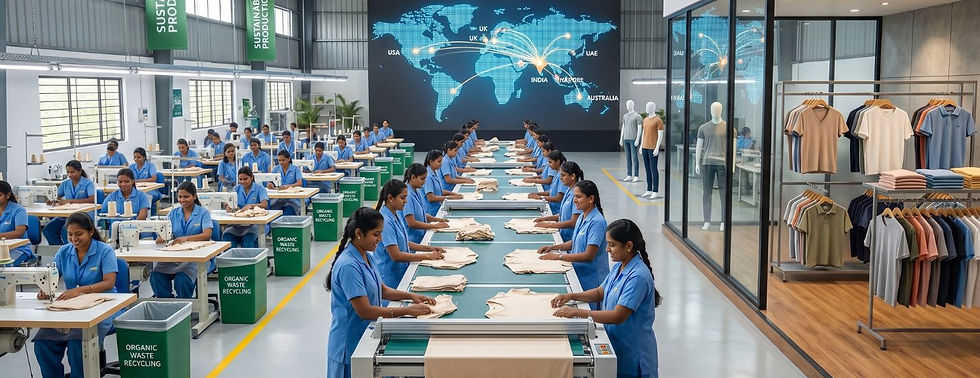
Backed by over 25 years of garment manufacturing expertise, NoName bridges the gap between creative vision and retail reality for brands across more than 25 countries.
Rather than forcing rigid, mass-production frameworks onto new lines, NoName empowers startups with flexible infrastructure designed to minimize risk:
Low MOQs for Startups: Launch collections efficiently with low thresholds, starting at just 100 pieces per style/color or 500 pieces across a shared fabric base.
Certified Sustainable Sourcing: Direct partnerships with premier global mills (such as Arvind, KG Fabriks, and Lenzing) provide access to GOTS, OEKO-TEX, BCI, and GRS-certified organic cotton, bamboo, and recycled blends.
End-to-End Product Development: Comprehensive guidance spanning conceptual planning, tech-pack evaluation, precision sampling, rigorous multi-tier quality control (QC), and custom packaging.
Working alongside an established manufacturer protects growing labels from costly trial-and-error mistakes in fabric shrinkage, poor color fastness, and bad fit grading.
By streamlining the journey from digital design to final delivery, an expert partner ensures your collection hits the market on schedule, fully aligned with your brand's quality standards and pricing strategy.
Conclusion
Choosing the right fabrics for t-shirts is one of the most important decisions for any fashion startup.
The perfect fabric depends on your brand story, customers, pricing strategy, and product expectations.
Cotton remains the most popular choice because of its comfort and versatility, while sustainable fabrics like organic cotton, bamboo, and hemp help brands build an eco-conscious identity. Synthetic fabrics like polyester and nylon provide performance benefits for activewear and technical products.
For startups, the goal should not be choosing the trendiest fabric. The goal should be choosing the fabric that helps your customers experience your brand exactly the way you imagine.
Working with an experienced t-shirt manufacturer can make this process easier by helping you understand fabric quality, sourcing options, and production possibilities.
Ready to start your t-shirt collection?
Partner with NoName and transform your idea into a professionally manufactured clothing line.
FAQs
1. What is the best fabric for t-shirts?
The best fabric depends on your product requirements. Cotton is the most popular choice because it offers comfort, breathability, and versatility. However, activewear brands may prefer polyester blends, while sustainable brands may choose organic cotton or bamboo.
2. Is cotton better than polyester for t-shirts?
Cotton is better for comfort and breathability, while polyester is better for durability, quick drying, and performance. The right choice depends on how the t-shirt will be used.
3. Which fabric should a new clothing brand choose for its first t-shirt collection?
Most startups begin with premium cotton or cotton blends because they offer a good balance between quality, customer acceptance, and production cost.
4. Are sustainable fabrics good for t-shirt manufacturing?
Yes. Sustainable fabrics such as organic cotton, bamboo, and hemp are excellent choices for brands targeting environmentally conscious customers.
5. How do I choose the right fabric supplier for my t-shirt brand?
Choose a supplier or manufacturer with experience in fabric sourcing, sampling, quality testing, and working with startups. A reliable partner can help you select fabrics that align with your collection goals and budget.

You should explore this article for T-shirt Manufacturing:
You can explore these articles also:
Also explore these articles for specific fabrics:
WhatsApp: +91-9717 508 508
Email: hello@nonameglobal.com
Website: www.nonameglobal.com
Online meeting: https://calendly.com/nonameglobal/meet
About the Author
This blog is written by Shraddha Srivastava, a fashion expert and industry observer known for breaking down complex trends into practical, actionable insights. With a strong understanding of garment manufacturing, retail, consumer psychology, and brand strategy, she also brings hands-on knowledge of apparel import–export processes, global compliance, and cross-border sourcing. Shraddha helps fashion brands navigate sourcing, imports, and market expansion, making growth simple, scalable, and data-driven.

Comments